


What is the Meaning of Nagas / Nakshi Jewellery and How are They Made?
- What is Nagas Jewellery? What is Nakshi Jewellery?
- Materials Used in Nagas / Nakshi Jewellery (Gold, Silver, Meenakari & Gemstones)
- Cultural Significance of Nagas Jewellery (Serpent Motif Meaning)
- History of Nagas Jewellery and Its Traditional Importance
- Traditional Materials Used in Naga Jewellery
- Cowrie Shells Used in Naga Jewellery
- Glass Beads in Traditional Naga Jewellery
- Bone Jewellery in Naga Tribal Designs
- Brass Jewellery in Naga Ornaments
- Step-by-Step Process: How Nagas / Nakshi Jewellery is Made
- Designing the Pattern (Nakshi Work Meaning)
- Cutting and Shaping the Jewellery Base
- Etching and Engraving (What is Nakshi Work?)
- Polishing and Finishing the Nakshi Jewellery
- Conclusion: Why Nagas / Nakshi Jewellery is Still Popular Today
Nagas Jewellery Meaning: What is Nakshi Jewellery and How is it Made?
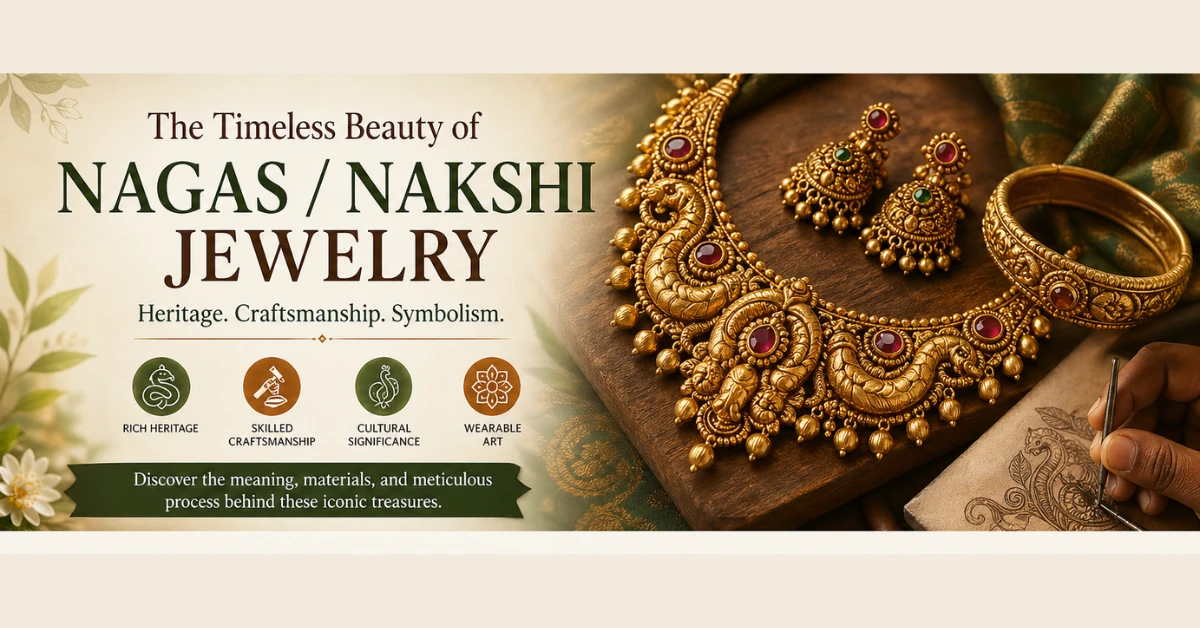
Ever wondered about intricate jewelry adorning the women? let me introduce you to the world of Nagas or Nakshi jewelry. These are native to parts of South India, specially Andhra Pradesh and Telangana. Nagas are made by skilled artisans who intricately weave gold and gemstones into spectacular necklaces, bangles, earrings and hair ornaments. The name comes from the snake-like shape of the jewelry that coils around the neck or wrist.
What is Nagas Jewellery? What is Nakshi Jewellery?
Nagas or Nakshi jewelry originates from the Indian state of Rajasthan.This style of jewelry is handcrafted the use of strategies that have been handed down through generations. The word ‘naga’ means serpent in Sanskrit, and this jewelry gets its name from the snake-like patterns and shapes incorporated into the design.
Materials Used in Nagas / Nakshi Jewellery (Gold, Silver, Meenakari & Gemstones)
The metals used are primarily gold and silver. Meenakari or enamelling is an important technique where coloured glass powder is fused onto the metal surface using high heat. Precious and semi-precious stones like rubies, emeralds stones are also embedded for colour and sparkle.
Skilled craftsmen first draw the design onto the metal surface. They then engrave and etch the sample using special chisels and hammers. The enamelling is done section by section, hardening each layer in a kiln before moving on. Gemstones are set in place and secured at the end. A single piece of naga jewelry can take many months of meticulous work to complete.
Cultural Significance of Nagas Jewellery (Serpent Motif Meaning)
The serpent motif is a symbol of fertility and new lifestyles. Peacocks represent beauty and everlasting love. These decorative embellishments are worn by girls throughout weddings, fairs and different unique events as a sign of social status, female strength and appropriate fortune. Intricate, vibrant and meaningful, naga jewelry is truly a wearable work of art.
History of Nagas Jewellery and Its Traditional Importance
These ornate pieces featuring serpent motifs have been worn for hundreds of years, dating again to the 2nd century BC. Traditionally, nagas were believed to keep mystical powers, so the jewelry turned into a notion to provide safety and appropriate fortune.
Brides often put on nagas necklaces, bangles and anklets at wedding ceremonies and receptions. It is a preference for newly married women. The undying enchantment and cultural heritage embodied in nagas jewelry has allowed it to stay an vital part of Indian adornment for ages. So the following time you notice an Indian bride incredible in gold and gems, you will know she's honouring an extended-standing subculture of expertise, mysticism and matrimonial symbolism.
Traditional Materials Used in Naga Jewellery
Traditional Naga jewelry makes use of substances which are locally sourced and keep cultural importance.
Cowrie Shells Used in Naga Jewellery
Cowrie shells, additionally known as sea shells, are commonly used in Naga earrings. The shells were once used as foreign cash, so they are seen as a symbol of wealth and status. The shells are polished and strung together on cotton threads to make necklaces and bracelets. Some tribes agree that the shells have protective powers and beat back evil spirits.
Glass Beads in Traditional Naga Jewellery
Glass beads were introduced through trade with neighbouring tribes and countries. Beads are available in a vibrant array of colours like red, blue and yellow. Beads are used to create alluring necklaces, headbands and decorations on traditional Naga apparel and textiles. Certain colour combinations and bead patterns can signify a woman’s marital status or the tribe she belongs to.
Bone Jewellery in Naga Tribal Designs
Animal bones, including bovine (cow or buffalo) and porcupine quills, are crafted into necklaces and hair pins. The bones are carved and polished into cylindrical shapes with complex designs. Bone jewelry is more commonly seen in tribes from Nagaland’s Konyak region. The craft of bone carving is surpassed down via generations and calls for an excessive stage of skill.
Brass Jewellery in Naga Ornaments
Brass, an alloy of copper and zinc, is used to make bangles, rings and ear ornaments. Brass jewelry adds a metallic sheen and tinkling sound when worn. The brass is hammered into thin sheets and shaped using basic tools and heat.
To summarise, the substances used in conventional Naga jewelry each have special cultural meaning and help to symbolise the tribe’s values, fame, and connections with nature. The jewelry handcrafted the usage of time-venerated strategies which have been handed down thru many generations.
Step-by-Step Process: How Nagas / Nakshi Jewellery is Made
The creation of Nagas or Nakshi jewelry is a meticulous process that can take skilled artisans days or even weeks to complete. Each piece is handcrafted using techniques passed down through generations.
Designing the Pattern (Nakshi Work Meaning)
The first step is designing the intricate pattern. Artisans sketch geometric, paisley, or floral motifs that will adorn the jewelry. These complicated styles are inspired by using nature and intended to awaken a sense of beauty. The sketches are then traced onto silver or gold plates to function as guides.
Cutting and Shaping the Jewellery Base
The metal plates are cut and shaped into the desired form, whether it’s a necklace, bangle, or earring. The surface of the metal is hammered to create texture and make it easier to etch the detailed pattern. gemstones, beads, or bells also attached at this stage.
Etching and Engraving (What is Nakshi Work?)
The etched pattern is what gives Nagas jewelry its distinctive appearance. Using small chisels and hammers, the artisan carefully traces the pattern onto the metal surface. This painstaking work requires a steady hand and keen eye. As the pattern emerges, the piece comes to life.
Polishing and Finishing the Nakshi Jewellery
The jewelry goes through numerous rounds of sharpening and completing. The floor is buffed to ease any sharp edges and bring out the etched design. Gemstones are also polished and the whole piece is cleaned earlier than a final inspection.
Conclusion: Why Nagas / Nakshi Jewellery is Still Popular Today
These gold adorns were a necessary part of South Indian hundreds of years and stay quite coveted to this present day. The amount of time, ability, and dedication that is going into making them is clearly extraordinary. Maybe you will even be inspired to begin your own collection of those undying treasures.
Recent Posts
 -60%
-60%
 -60%
-60%
 -60%
-60%
Wholesale 925 Sterling Silver Pave Diamond Handmade Wooden Cufflinks Men's Jewelry
 -60%
-60%
 -65%
-65%
14K Yellow Gold Emerald Pave Diamond Cufflinks Jewelry Manufacturer
-60%
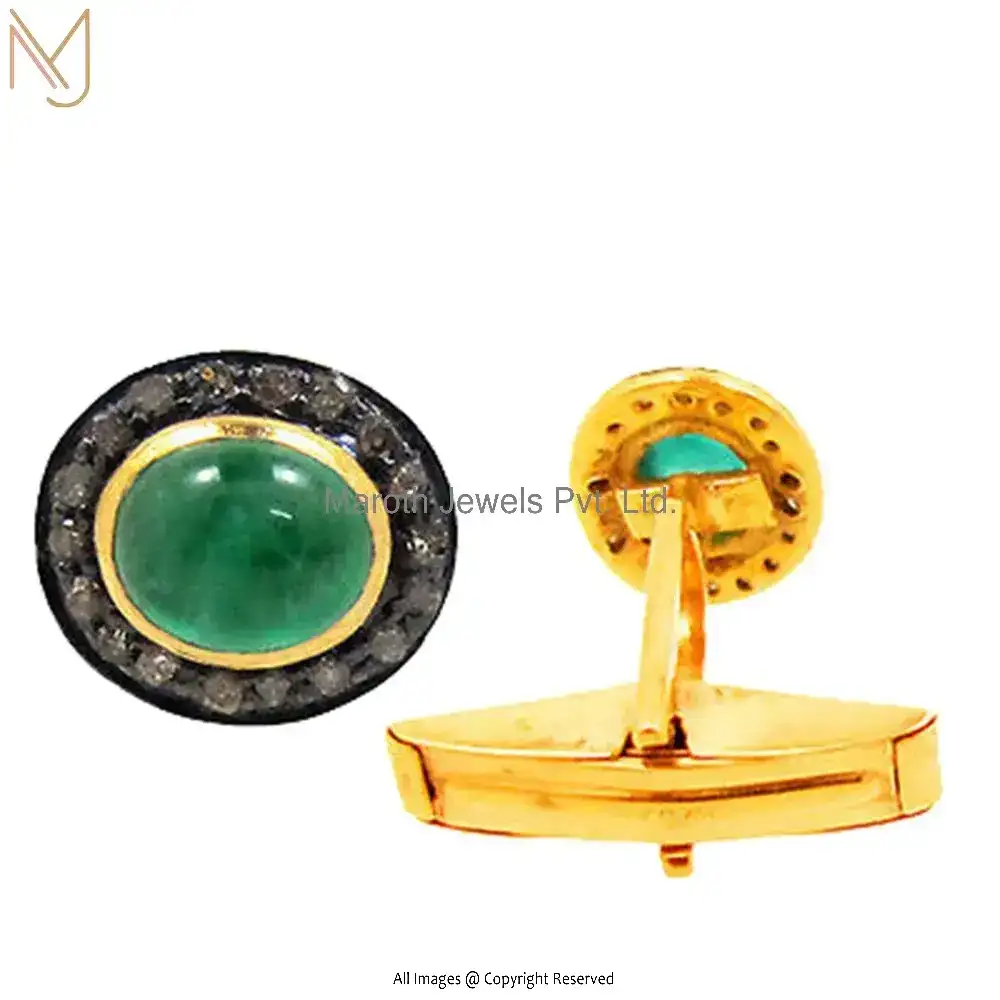
925 Silver Natural Emerald Pave Diamond Cufflinks Jewelry Manufacturer
 -60%
-60%
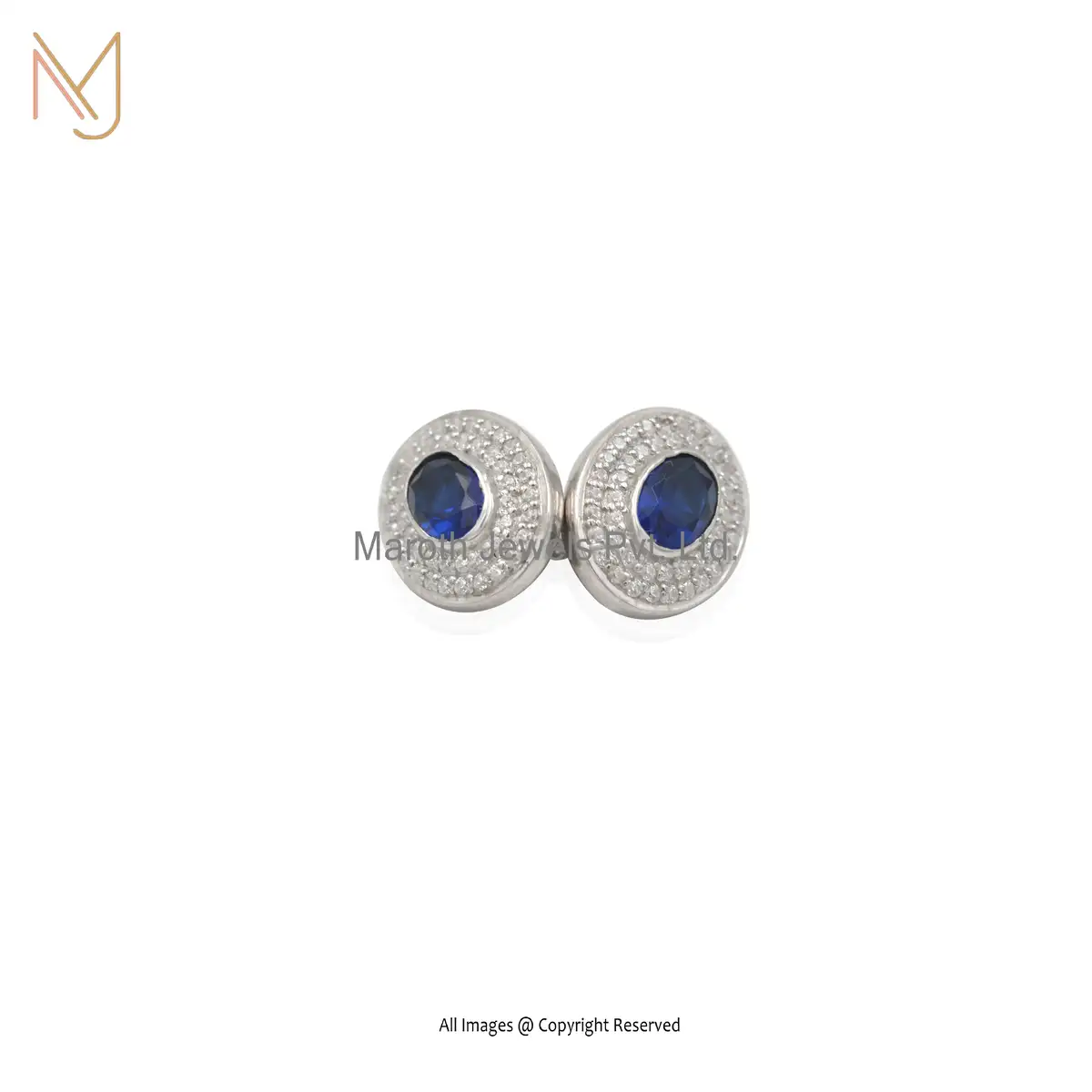
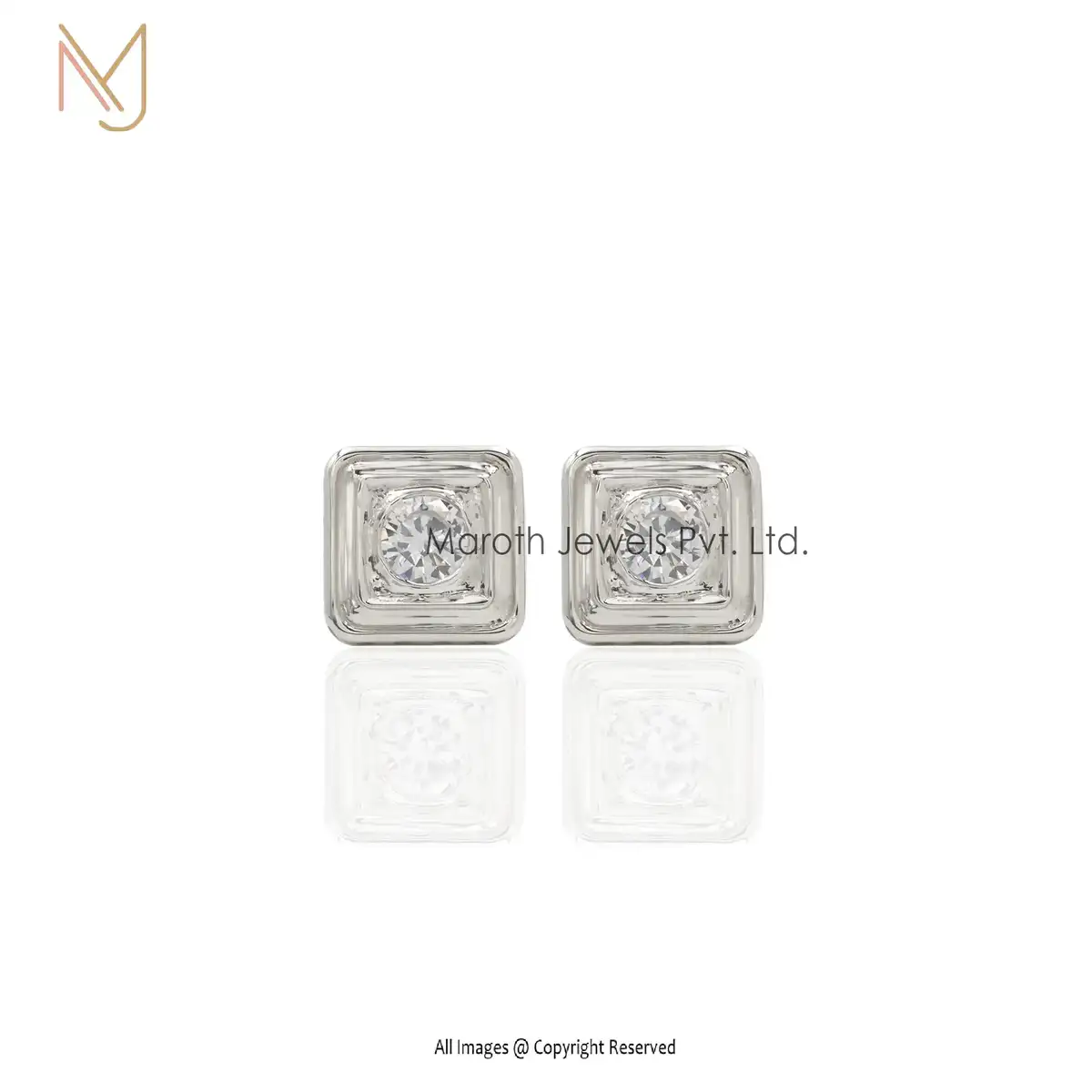
925 Silver White Gold Plated Spring Back CZ Cufflink Custom Jewelry
 -60%
-60%
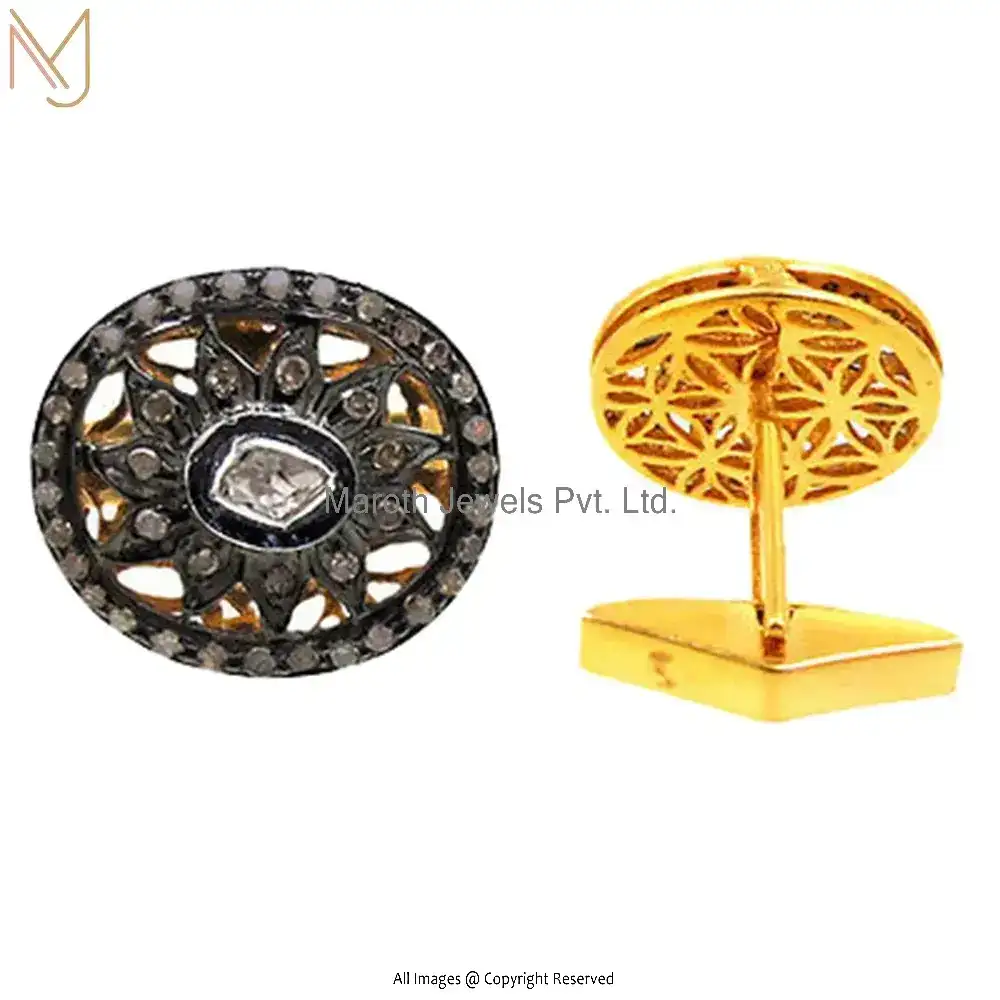
925 Silver Yellow Gold Plated CuffLink Manufacturer
 -60%
-60%
 -60%
-60%
925 Sterling Silver Designer CuffLinks Men's Gold Plated Pave Diamond Manufacturer
-60%
-60%
-60%
Wholesale 925 Sterling Silver Pave Diamond Handmade Wooden Cufflinks Men's Jewelry
-60%
-65%
14K Yellow Gold Emerald Pave Diamond Cufflinks Jewelry Manufacturer
-60%
925 Silver Natural Emerald Pave Diamond Cufflinks Jewelry Manufacturer
-60%
925 Silver White Gold Plated Spring Back CZ Cufflink Custom Jewelry
-60%
925 Silver Yellow Gold Plated CuffLink Manufacturer
-60%
-60%
925 Sterling Silver Designer CuffLinks Men's Gold Plated Pave Diamond Manufacturer
Contact Us For Custom Jewelry
Please get in touch with us and share your ideas if you have personalized jewelry or are searching for a private label jewelry manufacturer. In accordance with your suggestions, we will make and present genuine jewelry.
B2B Jewelry Manufacturer for Global Brands
Share your design, metal, plating, gemstone, and quantity requirements for a custom manufacturing quotation. We work in sterling silver and solid gold, including precious, semi-precious, lab diamond, and genuine diamond jewelry.