


Red Agate Ring Price in the USA: The Complete 2026 Cost & Buying Guide
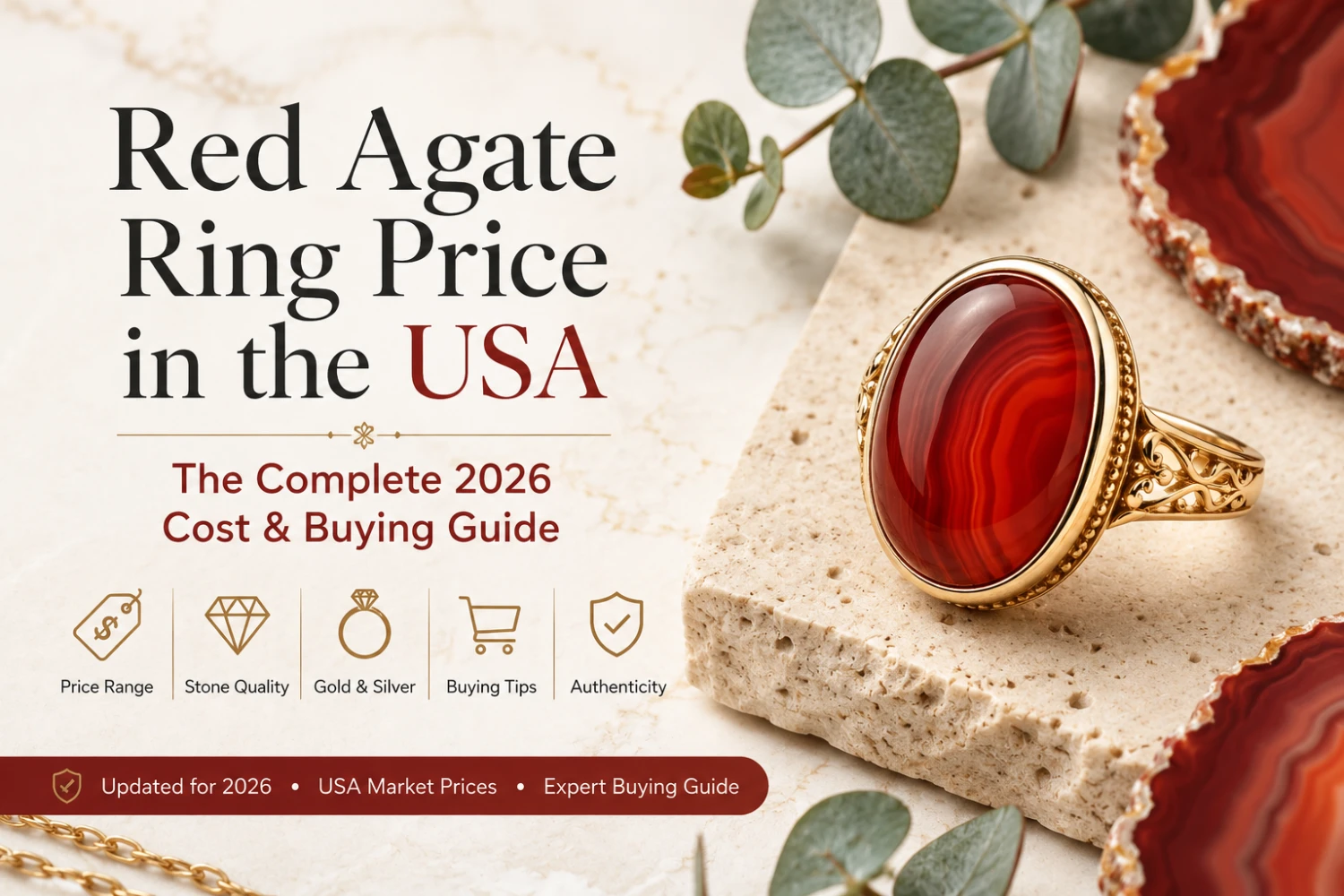
Red Agate Ring Price in the USA: The Complete 2026 Cost & Buying Guide
If you have ever typed "red agate ring price" into Google and found yourself bouncing between Amazon listings at $15, Etsy shops at $120, and boutique jewelers asking $500 for what looks like the same fiery red stone, you are not alone. Red agate is one of the most loved semi-precious gemstones in America and also one of the most confusingly priced.
So let's clear the fog. In this guide, we break down exactly how much a red agate ring costs in the USA in 2026, what drives the price up or down, how to tell natural red agate from dyed imitations, and how to make sure every dollar you spend goes into genuine stone and craftsmanship not marketing fluff.
Whether you are a shopper hunting for a meaningful gift, a collector adding to your gemstone jewelry box, or a retailer or jewelry brand sourcing red agate rings in bulk, this guide was written for you.
Quick Answer: In the USA, a genuine red agate ring typically costs $25 to $80 in fashion or gold-plated settings, $60 to $250 in 925 sterling silver, $300 to $900 in solid 14k gold, and $800 to $2,500+ for fine 18k gold or designer pieces. Handcrafted artisan rings from boutique studios generally run $200 to $500. Wholesale buyers sourcing directly from a manufacturer can pay 40–70% less than U.S. retail prices.
Now let's dig into the details.
Red Agate Ring Price in the USA at a Glance (2026)
Before we explore the "why" behind the numbers, here is a snapshot of what red agate rings actually sell for across the American market right now, based on live pricing across major U.S. marketplaces, department retailers, and specialty jewelers:
A few real-world reference points from the current U.S. market help anchor these ranges. Big-box retail listings for rhodium-plated sterling silver red agate rings sit at around $130. Specialty men's jewelry brands price square-cut red agate silver rings between roughly $180 and $250 at full retail, with frequent discounting into the $120–$170 range. Independent fine jewelers sell sterling silver rings with large natural red agate cabochons for around $90–$100. On open marketplaces like eBay, men's red agate signet rings cluster between $60 and $250, with premium handcrafted examples reaching $350–$450. Boutique handcrafted agate ring studios in the U.S. typically start their pieces between $220 and $500.
In other words: there is no single "red agate ring price." There is a price spectrum and where a ring lands on it depends on nine specific factors we'll walk through shortly.
What Exactly Is Red Agate? (And Why It's Special)
Red agate is a variety of chalcedony, a microcrystalline form of quartz that forms in layered bands inside volcanic and metamorphic rock cavities over millions of years. Its signature red-to-reddish-brown color comes from iron oxide impurities trapped within those silica layers as the stone formed.
A few quick facts that matter for pricing:
Hardness:
Red agate scores 6.5–7 on the Mohs scale hard enough for daily-wear rings, which is one reason it has remained popular in men's and women's jewelry for thousands of years.
History:
Red agate (often called "carnelian agate" or, in Middle Eastern and South Asian traditions, "Aqeeq" or "Yemeni agate") has been carved into seals, talismans, and rings since ancient Mesopotamia and Egypt. Roman soldiers wore red agate for courage. This deep cultural history is why men's red agate rings remain one of the strongest-selling gemstone ring categories in the U.S. today.
Rarity:
Agate as a mineral family is abundant, which keeps the raw material affordable. However, naturally vivid redagate is among the rarer and more desirable colors. Gemstone pricing guides consistently rank rich red, blue, and green agates as the most valuable color categories, while common gray, white, and black material sells for far less. That color rarity is a key reason a deep, naturally red stone commands a premium over a pale or dyed one.
Symbolism:
In crystal traditions, red agate is associated with protection, vitality, grounding, courage, and the root chakra. Many American buyers purchase red agate rings as much for meaning as for beauty and that emotional value is part of what supports its market price.
How Much Is Red Agate Worth Per Carat?
Because agate is plentiful as a raw mineral, loose red agate is one of the most affordable gemstones in the world on a per-carat basis and that is great news for ring shoppers.
Loose red agate stones (cut and polished):
Most commercial-grade red agate cabochons and faceted stones sell for roughly $1 to $10 per carat in the U.S. market. Higher-grade material with deep, even, natural color, strong translucency, and clean surfaces can reach $15 to $30+ per carat. On marketplaces, finished loose red agate gems commonly list anywhere from a few dollars for small commercial stones up to $70–$99 for large, fine-quality cut specimens.
What this tells you as a buyer:
When you pay $150 for a sterling silver red agate ring, the majority of that price is not the stone it is the silver, the design, the labor of cutting and setting, quality control, brand positioning, and retail markup. This is exactly why two rings with nearly identical stones can be priced $40 apart on one site and $400 apart on another.
Understanding this breakdown is your single biggest advantage as a shopper. It means you should evaluate a red agate ring primarily on:
The quality and authenticity of the stone (natural vs. dyed)
The metal (solid silver or gold vs. plated alloy)
The craftsmanship of the cut and setting
9 Factors That Determine Red Agate Ring Prices in the USA
Here is precisely what moves a red agate ring from the $20 bin to the $2,000 showcase.
1. Natural vs. Dyed Stone
This is the number one price factor and the number one place shoppers get misled. Agate is porous, which makes it easy to dye. A huge share of the bright, uniform "red agate" sold in budget jewelry is actually gray or white agate that has been heat-treated or dyed red.
Dyed agate is not "fake" it is real agate with enhanced color, and it is perfectly fine if disclosed and priced accordingly. But naturally red agate, colored by iron oxide during formation, is rarer and worth meaningfully more. A natural-color stone with attractive banding can be worth 2–5x an equivalent dyed stone.
Price impact: Dyed-stone rings dominate the under-$50 market. Natural red agate rings generally start around $60–$90 in sterling silver.
2. Color Depth and Evenness
Within natural stones, color quality drives value. The most prized red agates show a rich, saturated red to deep brownish-red ("ox blood" in Aqeeq terminology) with good evenness or attractive natural banding. Pale, washed-out, or muddy stones sit at the bottom of the price range. Gem pricing guides consistently note that deep, vibrant color is one of the strongest value multipliers for agate.
Price impact: A vivid, evenly colored natural red stone can add $50–$200+ to a ring's price versus a pale one in the same setting.
3. Translucency and Clarity
Hold a fine red agate up to light and you will often see a warm glow at the edges. That translucency is a hallmark of quality chalcedony. Stones that are clean free of cracks, chips, pits, and distracting inclusions command premiums, while fractured or heavily pitted stones are discounted heavily.
Price impact: Clean, translucent stones add 20–50% over opaque, included material of the same color.
4. Cut and Carat Size
Most red agate rings feature cabochons (smooth, domed cuts) that showcase the stone's color and bands. Larger, well-proportioned cabochons require larger rough and more skilled lapidary work. Interestingly, agate value does not scale linearly with size doubling the carat weight of a fine stone can raise its price several times over, because large clean material is harder to source.
Price impact: Rings with statement-size stones (15mm+) typically cost 30–100% more than the same design with a small stone.
5. The Metal: Where Most of Your Money Goes
For most red agate rings, the setting metal is the biggest cost component:
Base metal / alloy / brass: $10–$50 rings. The stone may be genuine, but durability is limited and plating wears off.
925 Sterling silver: The sweet spot for value. With silver trading at historically elevated levels in 2026, a well-made solid silver ring legitimately costs $60–$250 at U.S. retail.
Gold vermeil (thick gold over sterling): $80–$300 gold aesthetics with silver economics.
Solid 14k gold: $300–$900 depending on gram weight and design.
Solid 18k gold: $800–$2,500+, where the ring is effectively a fine-jewelry object that happens to feature an affordable gem.
6. Craftsmanship: Handmade vs. Mass-Produced
A cast, mass-produced ring from an overseas factory line and a hand-fabricated ring with hand-carved details, milgrain, or custom engraving are different products entirely. Handcrafted U.S. and artisan-made rings routinely sell for $200–$500 because you are paying for bench time, not just materials. Men's Aqeeq-style rings with intricate hand engraving from specialist silversmiths often land in the $150–$450 range.
7. Brand, Retailer & Channel Markup
The same quality ring can be priced wildly differently depending on where it is sold:
This is why savvy retailers and increasingly, savvy consumers buying for groups, weddings, or resale source from wholesale jewelry manufacturers directly.
8. Treatment Disclosure & Certification
Rings sold with proper gemological disclosure (natural vs. dyed, origin information) and from reputable sellers with authentication carry justified premiums. Certification matters less for agate than for diamonds or rubies the stone's modest per-carat value rarely justifies formal lab reports but transparent sellers earn pricing power because they remove buyer risk.
9. Design Complexity & Extras
Halo settings with accent cubic zirconia or diamonds, two-tone metals, hand-set pavé, adjustable bands, engraving, and custom sizing all add cost. A simple bezel-set solitaire in silver might be $75; the same stone surrounded by a pavé diamond halo in 14k gold can easily exceed $1,000.
Red Agate Ring Prices by Where You Shop in the USA
Let's get practical. Here is what the major U.S. buying channels actually charge in 2026, and the trade-offs of each.
Amazon $12 to $150
Amazon dominates volume in the under-$100 segment. You will find hundreds of red agate ring listings from small businesses, with frequent coupons and a heavy concentration of plated and dyed-stone pieces under $40, plus a decent selection of sterling silver options between $40 and $120. Pros: Speed, easy returns. Cons: Inconsistent quality, frequent undisclosed dyeing, thin product information.
Etsy $30 to $400
Etsy is the U.S. home of handmade and vintage red agate rings. Independent makers offer genuinely unique pieces, customization, and natural stones, typically from $30 for simple wire-wrapped designs up to $250–$400 for solid silver or vermeil artisan work. Pros: Uniqueness, direct maker contact. Cons: Variable craftsmanship standards, longer shipping, prices vary enormously for similar items.
eBay $25 to $450
eBay is particularly strong for men's red agate and Yemeni Aqeeq rings, plus vintage and estate pieces. Current men's red agate signet listings cluster between about $60 and $250, with handcrafted premium silver examples reaching $350–$450 and budget pieces starting near $25–$60. Pros: Huge selection, negotiable "Best Offer" pricing, vintage finds. Cons:Authentication is on you; study seller ratings and photos carefully.
Walmart & Big-Box Retail $50 to $200
Mainstream retailers carry a modest selection, typically rhodium-plated sterling silver red agate rings in the $100–$150 zone for example, current listings around $130 with free shipping and returns. Pros: Trusted returns, consistent quality floor. Cons: Limited designs, little gemological detail.
Specialty & Boutique Jewelers $90 to $500+
Dedicated gemstone and silver jewelry brands offer the best balance of quality assurance and design. Men's specialty silver brands price red agate rings around $180–$250 retail (often discounted 30%+), while independent fine jewelers sell natural red agate statement rings from roughly $90 upward, and handcrafted boutique studios price agate rings between about $220 and $500.
Wholesale Manufacturers (B2B) $8 to $60 per piece
If you run a jewelry boutique, an online store, or a brand, manufacturer-direct sourcing changes the math entirely. Wholesale 925 silver red agate rings from established manufacturers like Maroth Jewels typically cost a fraction of U.S. retail often 40–70% less with custom design, private labeling, and bulk quality control included. We'll cover this in depth below, because it is the single biggest pricing lever in the entire red agate market.
Men's vs. Women's Red Agate Ring Prices
Red agate is one of the few gemstones where the men's market is as large as arguably larger than the women's market in the USA, driven by the deep tradition of Aqeeq rings and the stone's bold, masculine look.
Men's Red Agate Rings: $60 – $450
Men's designs use substantially more metal heavy signet shanks, wide bezels, chunky square or oval faces which raises material cost. Typical U.S. pricing:
Budget silver signets: $60 – $100
Quality handcrafted 925 silver Aqeeq-style rings: $120 – $250 (the heart of the market)
Premium hand-engraved or large-stone pieces: $250 – $450
Solid gold men's red agate rings: $600 – $2,000+
Yemeni-style Aqeeq rings deserve special mention: stones marketed as genuine Yemeni red agate ("Aqeeq Yamani") carry significant cultural and collector premiums, with fine examples selling for several hundred dollars even in silver. Be aware that much "Yemeni" agate on the market is actually sourced elsewhere provenance claims should come from trusted sellers.
Women's Red Agate Rings: $40 – $350
Women's designs typically use daintier bands and smaller stones, lowering metal cost but often adding design complexity (halos, accents, stacking sets):
Minimalist silver solitaires: $40 – $90
Statement cabochon rings: $90 – $200
Vermeil and gold-accent designs: $120 – $300
Solid gold fine jewelry pieces: $350 – $1,500+
Red Agate vs. Carnelian vs. Red Onyx: Price Comparison
These three reddish chalcedony gems are constantly confused and often mislabeled in U.S. listings. Knowing the difference protects your wallet.
Practical takeaway: red agate and carnelian are essentially price-equivalent siblings gemologically, carnelian is often classified as the unbanded variety while red agate shows banding. "Red onyx" is most often a marketing term; price it skeptically. None of the three should ever be priced like ruby or garnet, so if a seller asks ruby money for "rare red agate," walk away.
How to Tell Natural Red Agate from Dyed or Fake (Before You Pay)?
Since authenticity is the biggest price variable, here is a practical checklist used by gem dealers:
1. Check the color distribution.
Natural red agate shows subtle variation zones, bands, gradients. Dyed stones often display a suspiciously uniform, lipstick-bright red, sometimes with dye concentrated in surface cracks (visible under a loupe as dark red lines).
2. Look for banding.
Agate's defining feature is its concentric or parallel banding. Visible natural bands in varying red/white/brown tones are a strong authenticity signal.
3. Test translucency.
Hold the stone to a phone flashlight. Genuine chalcedony glows softly at the edges. Glass imitations look uniformly transparent or show internal bubbles; opaque resin shows nothing.
4. Feel the temperature and weight.
Real agate feels cool to the touch and noticeably dense. Resin and plastic imitations feel warm and light.
5. Check the hardness context.
Agate (Mohs 6.5–7) resists scratching by a steel pin; plastic and glass imitations scratch or chip easily. (Don't test a ring you haven't bought!)
6. Scrutinize the price.
A "natural untreated red agate ring in solid sterling silver" for $12 with free shipping is telling you what it is. Solid 925 silver alone metal, casting, finishing costs more than that to produce honestly.
7. Buy from disclosed, reputable sources.
Established manufacturers and jewelers state whether stones are natural or color-enhanced. Silence on treatment is itself information.
Red Agate Ring Benefits & Meaning (Why Demand Stays Strong)
Part of what supports red agate ring prices in the USA is enduring demand rooted in meaning. While these properties are matters of tradition and personal belief rather than science, they are central to why people buy:
Protection: Across Middle Eastern, South Asian, and East Asian traditions, red agate is worn as a protective talisman against negativity and misfortune.
Courage & vitality: From Roman soldiers to modern wearers, red agate symbolizes strength, confidence, and physical energy.
Grounding & stability: Crystal practitioners associate red agate with the root chakra security, stability, and calm under pressure.
Harmony in relationships: In feng shui and Chinese tradition, red agate is linked to luck, warmth, and emotional balance.
Anniversary & zodiac significance: Agate is a traditional gemstone for the 12th wedding anniversary and is associated with Gemini, while red varieties are popular alternative birthstones for fiery signs like Aries.
Is a Red Agate Ring a Good Investment?
Honest answer: buy red agate for beauty, durability, and meaning not financial appreciation.
Agate is an abundant mineral, and even fine red material is affordable per carat. Unlike rubies or fine sapphires, ordinary red agate rings do not reliably appreciate. That said, three categories do hold or gain value:
Antique and signed pieces Victorian, Art Deco, and signed designer red agate rings trade as collectible jewelry, often at $150–$1,000+.
Exceptional natural specimens stones with extraordinary natural color, banding patterns, or verified provenance (e.g., genuine old-stock Yemeni Aqeeq) command collector premiums that have risen steadily.
High-craftsmanship gold pieces where the gold content itself provides a value floor that has grown with metal prices.
How to Get the Best Price on a Red Agate Ring: 8 Smart-Buyer Rules
Set your metal first, stone second. Decide silver vs. gold before browsing it instantly defines your realistic budget band and filters out 80% of noise.
Demand treatment disclosure. Ask directly: "Is this stone natural color or dyed?" Reputable sellers answer immediately and specifically.
Compare per-design, not per-listing. The identical factory design often appears on Amazon, eBay, and independent sites at three different prices. Reverse-image-search the product photo.
Time your purchase. U.S. jewelry discounting peaks around Black Friday/Cyber Monday, Valentine's Day, Mother's Day, and mid-summer clearances, when 25–40% off specialty brands is routine.
Check the silver markings. Look for "925," "Sterling," or "S925" stamps inside the band. No stamp on a "silver" ring is a red flag.
Weigh return policies as part of price. A $110 ring with free 30-day returns is often a better buy than a $95 final-sale ring.
For statement stones, buy by the millimeter. Sellers love vague "large stone" claims; exact dimensions (e.g., 20 x 15mm) let you compare real value.
Buying multiple pieces? Go wholesale. For 10+ rings bridal parties, retail stock, brand launches manufacturer-direct pricing transforms your cost structure. Which brings us to the most important section for business buyers.
Wholesale Red Agate Ring Pricing: The Manufacturer-Direct Advantage
Here is the part of the price equation most articles never tell you: the wholesale layer.
Every red agate ring sold in America was manufactured somewhere and the global center of gemstone cutting and silver jewelry manufacturing is Jaipur, India, where skilled lapidaries and silversmiths have shaped colored stones for centuries. The ring you see at $180 in a U.S. boutique very often left a Jaipur workshop at $20–$45.
What Wholesale Red Agate Rings Actually Cost
Ranges depend on order quantity, stone grade, metal weight, and customization. Request a live quote for exact pricing.
Who Should Buy Wholesale?
Jewelry retailers and boutiques stocking gemstone collections
Online sellers on Amazon, Etsy, eBay, Shopify, and TikTok Shop seeking healthy margins
Jewelry brands and designers wanting private-label or custom red agate lines
Crystal and metaphysical shops where red agate is a perennial bestseller
Event buyers wedding parties, corporate gifts, spiritual communities
Why U.S. Businesses Source Red Agate Rings from Maroth Jewels?
Maroth Jewels Pvt. Ltd., established in 2010 in Jaipur the gemstone capital of the world is a leading wholesale jewelry manufacturer and supplier serving retailers, brands, and boutiques across the USA and Europe. Here is what that means for your red agate sourcing:
Manufacturer-direct pricing: No middle layers. You buy at true factory wholesale, typically 40–70% below U.S. retail equivalents.
Genuine materials, disclosed honestly: Natural and ethically sourced gemstones set in certified 925 sterling silver and solid 9k/14k/18k/22k gold with treatments always disclosed.
Custom & private label manufacturing: Your designs, your logo, your packaging. Maroth Jewels' in-house design team converts sketches or CAD files into production-ready red agate rings.
Low minimums, scalable volume: From boutique trial orders to thousand-piece programs.
Full-spectrum gemstone expertise: Beyond red agate carnelian, moss agate, black onyx, moonstone, labradorite, and 100+ gemstone varieties under one roof.
USA-focused logistics: Reliable, insured shipping to the United States with responsive communication in U.S. business hours.
If you sell jewelry in the USA, the question is not whether your competitors are sourcing manufacturer-direct many already are. The question is whether your margins can afford not to.
[Request a wholesale quote for red agate rings from Maroth Jewels →]
How to Care for a Red Agate Ring (Protect What You Paid For)
Agate's 6.5–7 hardness makes it a durable daily-wear stone, but smart care keeps both stone and setting looking new:
Cleaning: Warm water, a drop of mild dish soap, and a soft brush. Rinse and dry with a lint-free cloth. This is all agate ever needs.
Avoid: Ultrasonic cleaners (can worsen hidden fractures), prolonged intense sunlight (can fade dyed stones and even some natural color over years), harsh chemicals like chlorine and household cleaners (damage both stone polish and silver), and steamers.
Storage: Keep your ring in a soft pouch or lined box, separated from harder gems like sapphire, topaz, and diamond that can scratch agate's surface.
Silver care: Wipe sterling silver with a polishing cloth after wear; store with anti-tarnish strips. Rhodium-plated pieces should not be polished aggressively.
When to remove it: Gym sessions, gardening, swimming, dishwashing. A $5 ring dish by your sink protects a $250 ring.
With basic care, a quality red agate ring genuinely lasts generations another reason its cost-per-wear beats nearly any fashion jewelry alternative.
Frequently Asked Questions: Red Agate Ring Prices
How much does a red agate ring cost in the USA?
Most genuine red agate rings cost between $60 and $250 in 925 sterling silver, which is the heart of the U.S. market. Fashion and plated versions run $10–$50, solid 14k gold pieces run $300–$900, and luxury 18k gold or designer rings can exceed $2,500. Wholesale prices from manufacturers like Maroth Jewels start under $10 per piece for bulk silver designs.
How much is red agate worth per carat?
Commercial-grade red agate sells for roughly $1–$10 per carat, with fine natural-color, translucent material reaching $15–$30+ per carat. Agate is one of the most affordable gemstones per carat, which means most of a ring's price reflects metal, craftsmanship, and brand rather than the stone itself.
Is red agate expensive?
No and that is its superpower. Red agate delivers the look, durability (Mohs 6.5–7), and symbolism of a fine gemstone at semi-precious prices. You can own a genuine, natural gemstone ring in solid sterling silver for about the cost of a dinner for two.
Why are some red agate rings $15 and others $500?
The spread comes from five variables: natural vs. dyed stone, solid precious metal vs. plated alloy, handcrafted vs. mass-produced, brand/channel markup, and design complexity. A $15 ring is typically dyed agate in plated base metal; a $500 ring is usually a natural statement stone, handcrafted in solid silver or vermeil by an artisan brand.
Is red agate natural or dyed?
Both exist widely in the U.S. market. Agate is porous and accepts dye easily, so much budget "red agate" is color-enhanced. Natural red agate colored by iron oxide during formation shows subtle zoning, visible banding, and edge translucency, and commands 2–5x the price of dyed equivalents. Always ask sellers for treatment disclosure.
What is the difference between red agate and carnelian?
They are close gemological siblings both red-to-orange chalcedony. Carnelian is traditionally the unbanded, translucent orange-red variety, while red agate shows banding. Prices are nearly identical, and U.S. sellers frequently use the names interchangeably.
Are Yemeni Aqeeq red agate rings worth more?
Yes genuine Yemeni Aqeeq (red agate from Yemen) carries strong cultural and collector premiums, with fine men's silver rings selling for $150–$450+. However, provenance claims are commonly exaggerated; buy "Yemeni" stones only from sellers you trust.
Do red agate rings hold their value?
Standard pieces are bought for beauty and meaning, not appreciation. Antique rings, exceptional natural specimens, and solid gold pieces are the exceptions that hold or gain value over time.
What ring metal is best for red agate?
925 sterling silver is the classic pairing its cool brightness makes red agate glow, and it keeps quality rings in the $60–$250 range. Yellow gold and vermeil create a warmer, more luxurious look at higher price points.
Where can I buy red agate rings wholesale in the USA?
The most cost-effective route is ordering directly from an established gemstone jewelry manufacturer. Maroth Jewels, founded in 2010 in Jaipur, India, manufactures and supplies wholesale red agate rings in 925 silver and solid gold to retailers and brands across the USA, with custom design and private-label services and savings of 40–70% versus retail-equivalent pricing.
Can I get a custom red agate ring made?
Yes. Custom manufacturing is more accessible than most buyers realize. Manufacturers like Maroth Jewels accept sketches, reference photos, or CAD files and produce made-to-order red agate rings in your choice of stone grade, metal, and finish for individuals via boutique partners, and directly for businesses at wholesale rates.
What size red agate stone should I choose?
For women's everyday rings, 6–10mm stones balance presence and practicality. For statement and men's rings, 12–20mm cabochons deliver the bold look red agate is famous for. Remember that price rises faster than size: large, clean natural stones are disproportionately scarce.
The Bottom Line: What Should You Pay for a Red Agate Ring in 2026?
Let's land the plane with clear recommendations by buyer type:
Budget shopper ($25–$60): Buy honestly labeled dyed agate in plated settings from high-rated marketplace sellers and enjoy it as fashion jewelry, not heirloom jewelry.
Quality-focused buyer ($90–$250): This is the value sweet spot. A natural red agate cabochon in solid 925 sterling silver from a reputable specialty jeweler or manufacturer-backed brand delivers genuine gemstone, genuine metal, and genuine craftsmanship.
Luxury & gift buyer ($300–$1,500): Solid 14k–18k gold settings, premium natural stones, designer or handcrafted construction. Prioritize metal weight and stone disclosure over brand names.
Collector ($150–$1,000+): Hunt antique pieces and provenance-verified Aqeeq through estate channels condition and documentation are everything.
Retailer or brand (from $8/piece wholesale): Skip every markup layer above and source manufacturer-direct. Your customers get better rings at better prices; you get margins that actually work.
Red agate has adorned human hands for over 4,000 years through empires, dynasties, and trends precisely because it offers what almost nothing else in jewelry does: real gemstone beauty, real durability, and real meaning at a price nearly anyone can reach.
Ready to Source Premium Red Agate Rings?
Maroth Jewels Pvt. Ltd. trusted wholesale gold, silver & gemstone jewelry manufacturer since 2010 designs and manufactures red agate rings for retailers, brands, and boutiques across the USA. From ready collections to fully custom private-label designs in 925 silver and 9k–22k gold, we deliver Jaipur craftsmanship at true manufacturer pricing.
Contact Maroth Jewels today for your wholesale red agate ring catalog and quote.
Recent Posts
 -65%
-65%
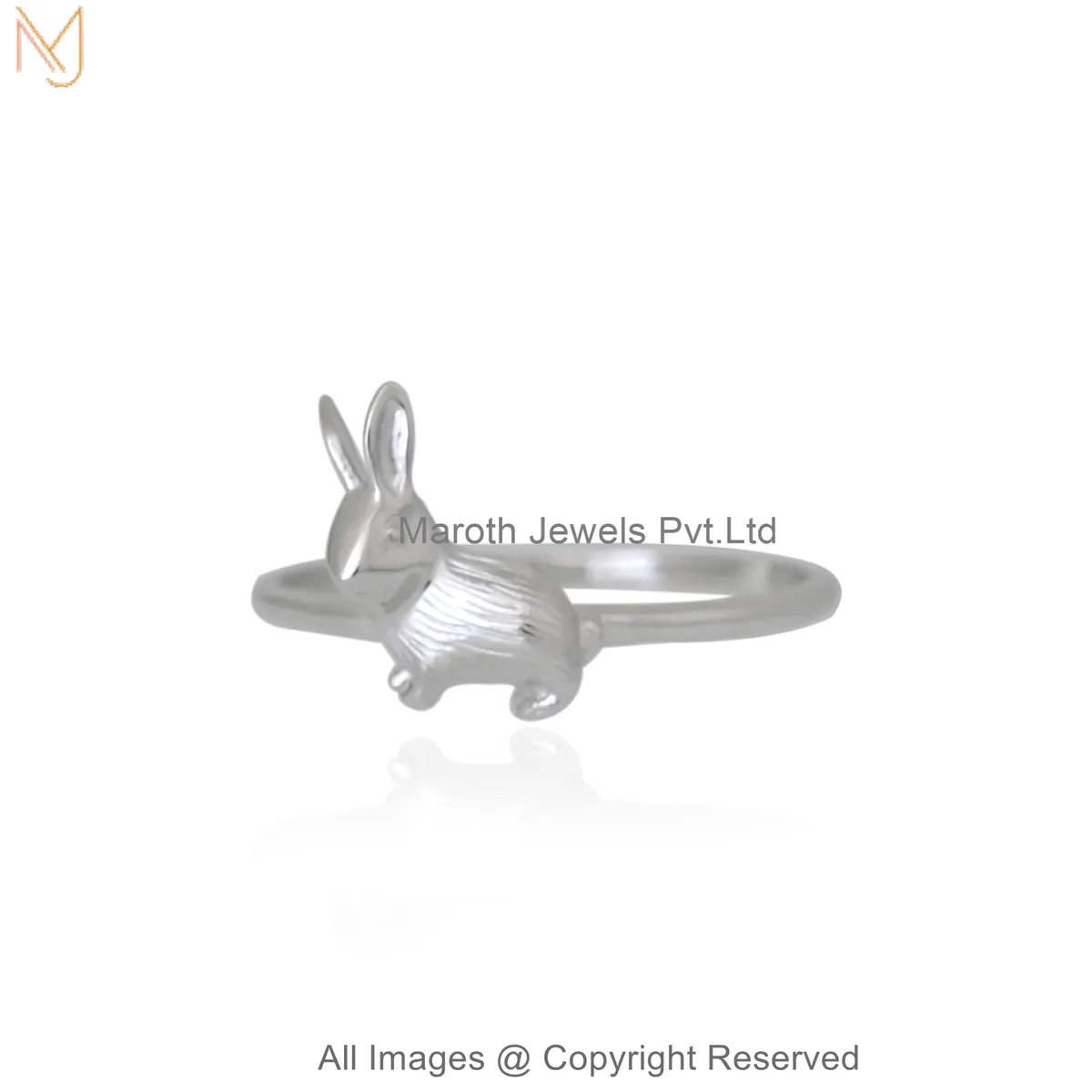
14K White Gold Minimal Rabbit Nature Inspired Bunny Animal Ring Manufacturer
14K Yellow Gold Black CZ Velvet Poodle Minimalist Puppy Animal Ring Custom Jewelry
 -65%
-65%
14K Yellow Gold Multi Enamel Gemstone Scarab Beetle Inspired Handmade Jewelry Supplier
14K Yellow Gold Black CZ Bird Ring – Nature Inspired Statement Manufacturer
 -65%
-65%
14K White Gold Minimal Rabbit Nature Inspired Bunny Animal Ring Manufacturer
14K Yellow Gold Black CZ Velvet Poodle Minimalist Puppy Animal Ring Custom Jewelry
-65%
14K Yellow Gold Multi Enamel Gemstone Scarab Beetle Inspired Handmade Jewelry Supplier
14K Yellow Gold Black CZ Bird Ring – Nature Inspired Statement Manufacturer
Contact Us For Custom Jewelry
Please get in touch with us and share your ideas if you have personalized jewelry or are searching for a private label jewelry manufacturer. In accordance with your suggestions, we will make and present genuine jewelry.
B2B Jewelry Manufacturer for Global Brands
Share your design, metal, plating, gemstone, and quantity requirements for a custom manufacturing quotation. We work in sterling silver and solid gold, including precious, semi-precious, lab diamond, and genuine diamond jewelry.