






difference between 24k, 22k and 18k gold
Gold purity and colour guide: What is the difference between 24k, 22k and 18k gold?
Gold is a transition metal that consists of a single gram of gold which can be beaten into a one square meter sheet of gold leaf. A good demand as well as an expensive metal that has the above features gold is popular, and is around the globe.
What is Karat?
Karat generally refers to the measuring of the purity of gold. Beyond this, the gold purity classification has been broken down in the following three karat terms: 24K, 22K, 18K.
Now, 24K affiliated yellow metal ornaments are those purer gold having 99.9% purity with it. Moreover, no other alloy or combination of the metal with gold is presented.
The gold purity and most common karat form that is used in gold jewelry is called gold karat, in this blog you will learn about different forms of karats and their pros and cons alongside gold purity tips that will help you in buying perfect gold jewelry.
VISIT FOR :: engagement rings st george
24K Gold – The Purest Form
24K gold, or yellow metal is one of those Purest and richest forms of gold available in the global market. Its magnificent 24K gold proves its magnificent purity being around 99.9 per cent and has all 24 parts in the gold, all pure gold with no trace of any other metals.
And by that, 1 gram 24k gold price, currently, is around INR 4800 approximately 65.7 USD. There is no karat that has the highest form of purity or the highest gold measure other than 24K. And if you’re looking for pure gold jewellery this is one which you should approach with all purity certificates and marks.
If you buy 24K yellow metal jewelry, you need a great deal of care due to its high softness and pliable characteristics. For the most, their coins and bars are mostly bought in 24K gold purity, going light (back to the ancient times of Rajas and Maharajas).
In these times 24K gold is primarily utilized in electronics and medical devices such as children suffering from ear infections who get fitted with gold tympanostomy tubes.
Pros and Cons of 24K
Colors are brilliant being 24K gold, that’s why you would definitely see warm lustrous, bright colors. Additionally, you have 100% gold content, one more for its slightly higher value than the same weight of jewelry containing lower percentages of gold. It also requires great care and attention and will break and get scratched easily.
22K Gold – Ideal for Jewelry
Of course, 22 Karat gold is not 100% pure gold since it's got 8.33% metals like silver, zinc, nickel and other alloys which are not gold; it is purer than that means it isn't 24K gold, it is slightly lower purer than 24K gold, sitting somewhere at 91.67% gold. However, they are only more strong and durable than 24 Karat gold jewelry. This kind of gold mixture is also commonly used for making jewelry.
Pros and Cons of 22K
Compared to 24K pure gold, it has 91.67% of gold having lesser price as a good sign for middle-class people to buy. Other metallic characteristics make the texture of gold harder thereby making the jewellery durable. It has no bad side if we have seen its purity mark considerable for good.
18K Gold – Perfect for Studded Jewelry
18K gold is' indulger ': 75 percent of gold only or just 25 per cent of other metals such as copper or silver. Studded jewelry and other diamond jewelry is generally made in 18K gold, however. The commercial price is also, besides, lower or less expensive than 24K and 22K.
Pros and Cons of 18K
The heavier they are, they are more durable than 22K and 24K gold. Gold jewelry made of 18K purity or fineness has less price marked, which is good for buying another type of gold jewelry, buy gold jewellery made of 18K. Moreover, This one has a slightly dull gold colour which fails to provide the pure gold suspicion.
VISIT FOR :: indian bangles bulk
It has brilliant red yellow lustrous colour and is also known as the sign of gold purity, talking about pure gold. Marked with 22k & 18k gold is usually the gold they move to other given there are a variety of colours. Those are –
Difference Between Forms of Gold Karat (24K, 22K, and 18K)
Coloured Gold: Different Shades of Gold
Pink or Rose gold – It’s made by adding more copper to the compound synthesis of gold.
Green Gold – Gold is turned green when more zinc and silver are added to it
White Gold – white shade of gold happens because of nickel or palladium addition
If it's something that needs to be walked to a jewelry shop or if you carry online gold ornaments, then prior to making a gold jewelry shopping, you should be given preference to certain special points.
Know the Karat Markings:
22 karat = 91.7 % gold
18 karat = 75.0 % gold
14 karat = 58.3 % gold
12 karat = 50.0 % gold
10 karat = 41.7 % gold
Conclusion
For better understanding, we simply break out some important preferences into our eyes and provide them the information in an easier way. 24 karat gold contains 24 sections of pure gold, 22 karat gold contains 22 sections of gold and 2 sections of different metals mixed in it as an amalgam, 21 karat gold contains 21 sections of gold with 3 sections of different metals added in it, 18 karat gold has 18 sections of pure gold with total six sections of The karat is a term for fineness.
Is 18K Gold More Valuable than 14K?
You face the dilemma of selecting between 14k gold jewelry and 18k gold jewelry. You're not alone. Most people who plan to purchase gold jewelry often struggle with deciding between 14k and 18k options. This message is for anyone who currently faces such a dilemma. You will find everything you need to reach the best selection below.
People from different age brackets together with a range of financial backgrounds choose gold jewelry as their preferred jewelry option. Customers find it challenging to base buying decisions on gold quality and price information that seems incorrect. The main distinction between 14k and 18k gold jewelry consists of their metal composition.
What is 14k gold jewelry?
The combination of pure gold with copper and silver metals forms 14k gold jewelry. The jewelry exhibits a 14k gold appearance alongside its solid composition at reduced price levels. 14k gold meets its maximum price at a natural point that makes it less costly than 18k or 24k gold because it contains less pure gold.
VISIT FOR :: custom jewellery maker
The meaning of this for your situation remains unclear. When you seek an economical substitute for 18K or 24K jewelry pieces then 14K stands as your top choice. You receive all the golden benefits of real gold wear combined with affordability in 14k gold compared to higher-karat alternatives without sacrificing the quality.
What is 18k gold jewelry?
Gold jewelry at 18 karat level contains superior purity to 14 karat gold jewelry. This gold alloy provides more value through increased metallic content which makes it both less long-lasting and more expensive than other metals used in jewelry. 18 karat gold refers to the amount of pure gold expressed as 18/24 which equals 0.75 (3/4).
The jewelry appearance and durability depend on this purity measurement standard. The material contains fewer karats than 14 karat so it shows signs of tarnish at a more rapid pace. Due to its gleaming quality the jewelry needs zero maintenance for preserving its material value.
The main distinctions between 14k and 18k gold jewelry products
The metal purity percentage can be understood through the numbers used in 14k and 18k. Gold purity is evaluated through karats while "k" represents this unit of measure in precious metal classification. A karat equals the percentage of pure gold when divided by 24 parts.
The total number of parts in 14K gold amounts to twenty-four which means fourteen parts exist. The alloy uses 58.33 percent gold with remaining components composed of silver and copper to achieve its sturdy and durable characteristics. The market offers 18K gold jewelry as the purest gold product since it consists of 75% gold content.
Quality:
Jewelry longevity depends on the quality of gold content since high-quality gold leads to long-lasting items. A piece of gold with superior quality becomes strong and resists both chipping damage and breaking occurrences.
VISIT FOR :: buy wholesale gold jewelry
The jewelry value rises as its karat percentage increases since high karat indicates superior quality. The value of 18k gold surpasses that of 14k gold in the market.
Color:
The color composition of 18k gold produces greater saturation than 14k gold by appearing more yellow and orange. The piece appears yellow and orange because it contains less pure gold which makes up eighteen twenty-fourths of its composition.
Price:
The larger amount of pure gold in 18k gold jewelry makes both the material more costly but also makes the pieces both durable and long-lasting compared to 14k gold. The extra cost between these two precious metals remains slight.
People who cannot frequently buy 18k gold jewelry can opt for 14k gold because it offers a weight-wise cost that's 50% less than what people pay for 18k gold thus providing affordable choices for special events and occasions.
Durability:
The durability level of 14k gold surpasses that of 18k gold. This means 14k gold better resists tarnish and discolored appearance while 18k gold shows less protection against these conditions.
Frequent polishing of 14k gold jewelry will be necessary compared to 18k pieces due to its shorter longevity of appealing appearance. People who intend to wear their jewelry daily should select 18k pieces due to their superior durability. The needs of most people would be adequately served by using 14k gold.
How To Choose Between 14k vs 18k Gold Jewelry?
You now possess knowledge about comparing 14k with 18k gold jewelry together with the elements which should determine your buying decision. The choice between these two elegant materials will depend exclusively on what customers prefer. Higher-grade materials will provide you with jewelry that lasts decades and would pass its aesthetic appeal to following generations.
People who seek affordable elegance should consider 14k gold as their choice option. Reach out to us with any questions about 14k and 18k gold jewelry or to get advice on which option suits you best.
10k vs 14k and 14k vs 18k Gold - Here's the Difference
Here we delve in more detail into the properties and advantages and disadvantages of 10k, 14k and 18k gold. This gold jewelry guide will guide you in choosing gold jewelry in the most informed way possible.
The Karat System: Deciphering the Numbers
Gold purity in the karats (k or kt) system. All it scales on is a scale of 24, with 24k being pure gold (99.9%). Pure gold is too soft to be used in most jewelry applications; so is alloyed with other metals to increase its strength and durability. The letter "k" is a part of the name that indicates the proportion of gold in the alloy (the number before it). For example:
24k Gold: 24/24 parts gold (99.9% pure)
18k Gold: 18/24 parts gold (75% pure)
14k Gold: 14/24 parts gold (58.3% pure)
10k Gold: 10/24 parts gold (41.7% pure)
Other metals that can be included in the remaining percentage are copper, silver, zinc, nickel, palladium and others. The alloy can be made of different specific metals, so their use may affect the gold’s color (yellow, white, rose), and perhaps other properties.
10k Gold: It is the Durable and Affordable Option
Composition: 41.7% gold and 58.3% other metal. Since this includes such a high percentage of the alloy, 10k gold is the strongest and most durable of the three.
Durability: Very resistant to scratching, denting, or bending. This makes it a great daily wear, especially to rings or other jewelry and such that are frequently in contact with hard surfaces or everyday wear conditions.
Color: Of the three, it has the palest yellow color. The higher alloy increases the amount of other metals and dilutes the natural orange hue of gold.
Price: At a lower gold content because this is by far the most affordable option.
Advantages:
Super durable for people who live an active life.
Budget-friendly.
Disadvantages:
Lower gold content, and so a less vibrant yellow color.
May cause more allergic reactions in people sensitive to some metals, particularly nickel.
Lower resale value compared to higher karat gold due to less gold content.
14k Gold: The Balanced Choice
Composition: 58.3% gold and 41.7% other metal.
Color: It’s richer yellow than 10k gold but not as deep as 18k gold. It’s a visual treat for many people and is therefore very much a popular choice.
Price: Very good value for a mid range price, and offers good quality for the price.
Advantages:
Balanced on durability, color and affordability.
Disadvantages:
Less pure than 18k gold.
18k Gold: The Most Purest and Luxurious Option
Composition: All gold and 25% other metals. This high gold content gives it the greatest richness and greatest depth of color.
Price: Of the three, with the highest gold content, the most expensive.
Other Important Factors:
Skin Sensitivity: 18k gold is the safest if you have sensitive skin or get known metal allergies because there is more gold.
Lifestyle: Look at what you do each day and see what your jewelry gets scratched against, or even banged. If you are active, 10k or 14k gold is recommended.
Investment Potential: And even if you do base your purchase on the value of gold, from a historical point of view, this should be a secondary or narrow indicator compared to how gold makes you feel and aesthetically how it looks. The intrinsic value of a higher karat gold is just a reflection of the gold content in it, moreover, there are other parameters in play such as craftsmanship, design and gemstones as well.
Commonly used gold alloys and their purity levels:
Together, the metals combine to make gold more durable and change the appearance. There are common alloys such as 18k, 14k and 10k gold. The table below outlines their purity levels:
24k gold: 99.9% pure gold
22k gold: Approximately 91.7% pure gold
18k gold: 75% pure gold
14k gold: 58.3% pure gold
10k gold: 41.7% pure gold
Gold jewelry is marked with hallmarks that are symbols or stamps giving an indication to its purity and authenticity. Search for marks like 750 if it’s a 18k price or 585 for 14k pricing.
Testing Methods
Acid Testing
This is numbered and used mostly by professionals and measures the amount of gold in other metal alloying.
That is a matter of applying nitric acid to the gold alloy, observing the reaction compared to pure gold.
When acid testing for gold purity, you’re going to want to arm yourself with a testing kit in nitric acid with varying strengths, test stone, and protective safety including gloves and goggles because acid testing is something that needs to be done with caution.
READ MORE :: The 4 C's of Diamond Grading: Cut, Color, Clarity, and Carat
Recent Posts
 -65%
-65%
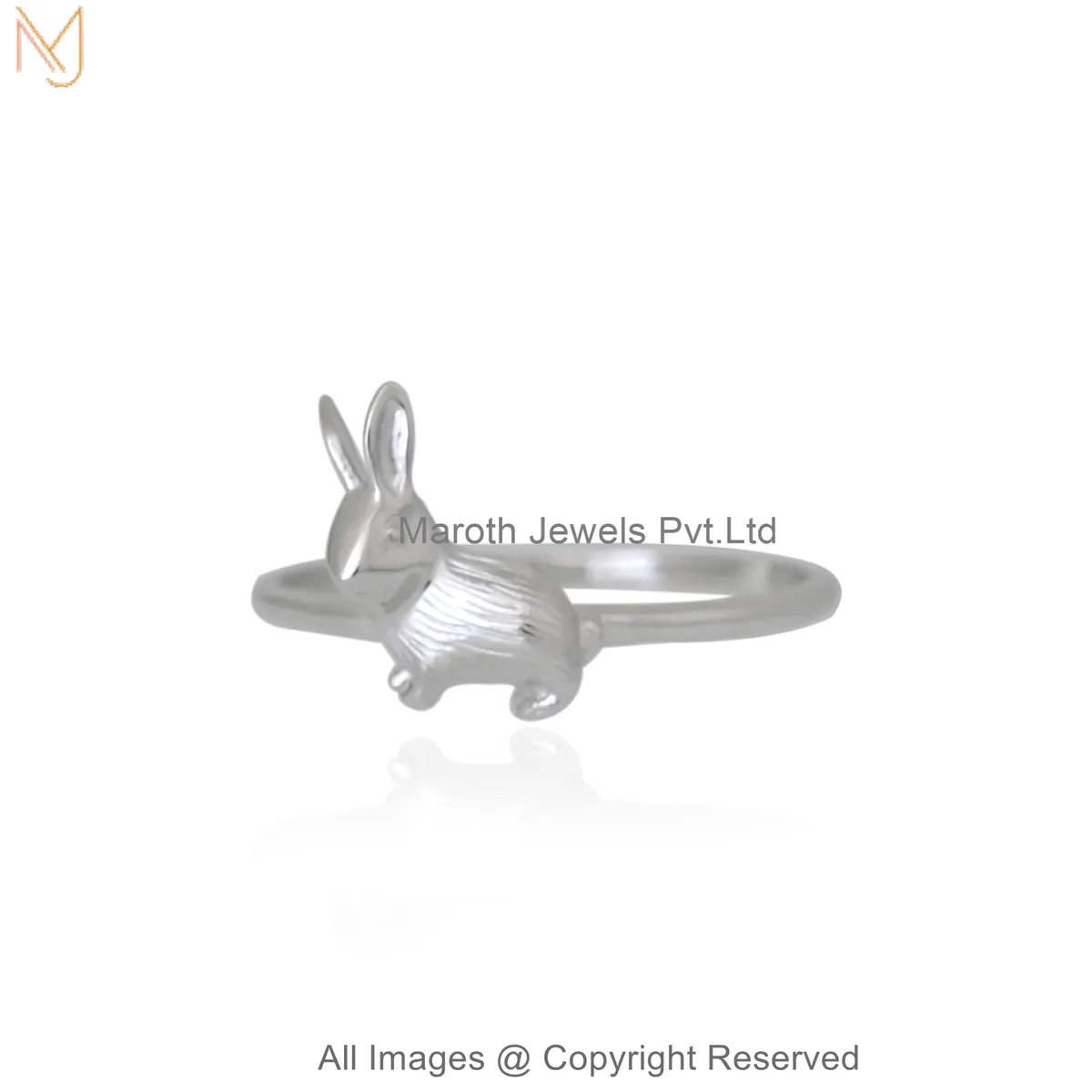
14K White Gold Minimal Rabbit Nature Inspired Bunny Animal Ring Manufacturer
14K Yellow Gold Black CZ Velvet Poodle Minimalist Puppy Animal Ring Custom Jewelry
 -65%
-65%
14K Yellow Gold Multi Enamel Gemstone Scarab Beetle Inspired Handmade Jewelry Supplier
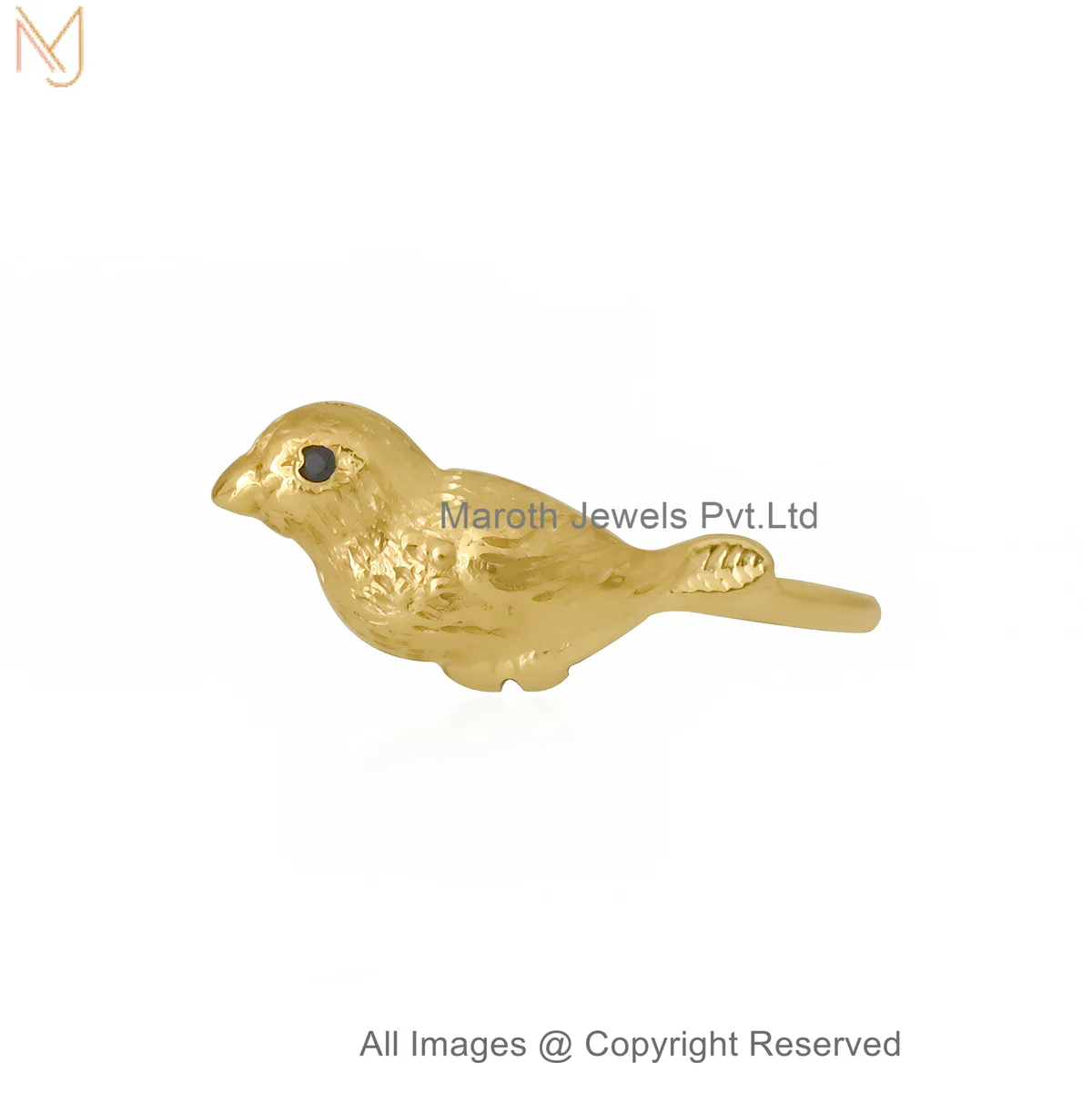
14K Yellow Gold Black CZ Bird Ring – Nature Inspired Statement Manufacturer
 -65%
-65%
14K White Gold Minimal Rabbit Nature Inspired Bunny Animal Ring Manufacturer
14K Yellow Gold Black CZ Velvet Poodle Minimalist Puppy Animal Ring Custom Jewelry
-65%
14K Yellow Gold Multi Enamel Gemstone Scarab Beetle Inspired Handmade Jewelry Supplier
14K Yellow Gold Black CZ Bird Ring – Nature Inspired Statement Manufacturer
Contact Us For Custom Jewelry
Please get in touch with us and share your ideas if you have personalized jewelry or are searching for a private label jewelry manufacturer. In accordance with your suggestions, we will make and present genuine jewelry.
B2B Jewelry Manufacturer for Global Brands
Share your design, metal, plating, gemstone, and quantity requirements for a custom manufacturing quotation. We work in sterling silver and solid gold, including precious, semi-precious, lab diamond, and genuine diamond jewelry.