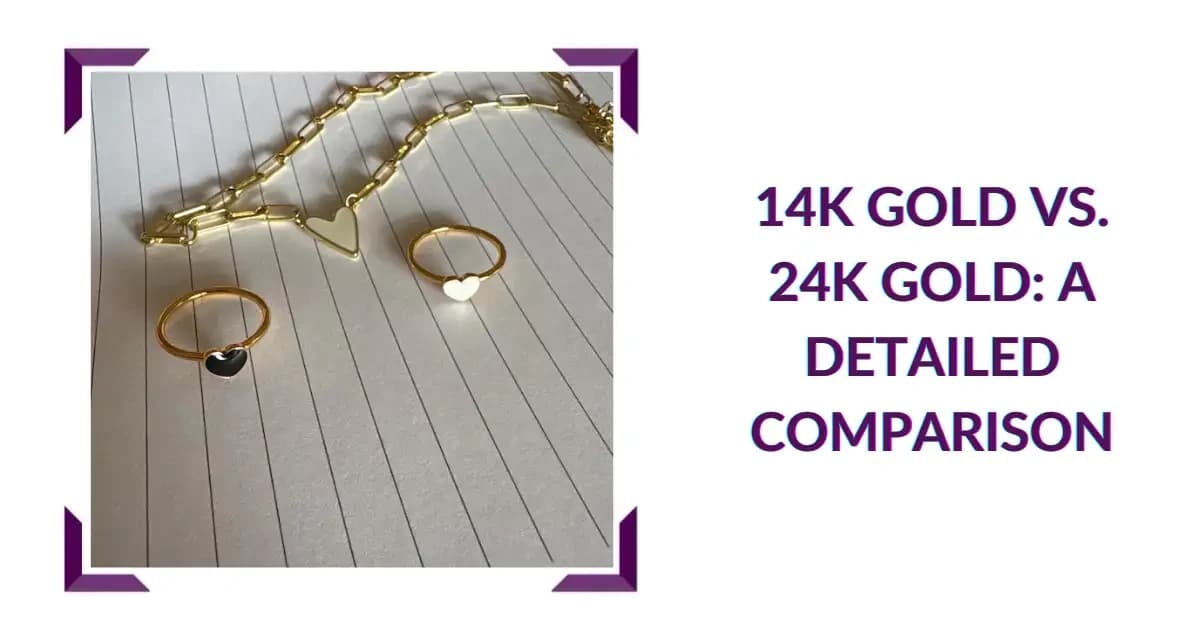
Or 14 carats contre or 24 carats : une comparaison détaillée
L'or est un métal précieux très recherché, utilisé à des fins décoratives et d'investissement, tout en trouvant des applications industrielles. Parmi les carats disponibles pour les bijoux et les lingots d'or, les plus courants sont le 14K et le 24K. Il est important de bien comprendre la classification de l'or avant d'en faire l'acquisition.
Cet article de recherche présente un examen approfondi de la relation entre l'or 14 carats et l'or 24 carats, qui comprend une analyse de leurs composants chimiques ainsi que des évaluations de durabilité, des estimations de coûts et des caractéristiques visuelles avec des considérations d'utilisation applicables.
Or 14 carats contre or 24 carats
Composition et pureté
Ce matériau en or pur est principalement utilisé comme placement financier car il est préférable de le conserver en réserve plutôt que de l'utiliser comme bijou d'ornement.
L'or 14 carats est composé à 58,3 % d'or pur et à 41,7 % d'alliages, notamment de cuivre, d'argent, de nickel ou de zinc. La présence de ces métaux supplémentaires confère au produit une plus grande résistance, mais modifie légèrement sa couleur. Sa composition lui assure une meilleure durabilité et le rend idéal pour les bijoux du quotidien.
Durabilité et résistance
La durabilité est le principal facteur de distinction entre l'or 14 carats et l'or 24 carats. De par sa pureté, l'or 24 carats reste mou, ce qui le rend sensible aux rayures, à la déformation et aux chocs. Ce matériau est moins adapté à un usage quotidien en bijouterie, car il est soumis à une usure importante. Une forte contrainte mécanique peut déformer définitivement les bijoux en or 24 carats.
L'incorporation de métaux par fusion dans l'or 14 carats renforce sa solidité et sa durabilité en durcissant le matériau. Les bijoux en alliage d'or 14 carats sont plus résistants que ceux fabriqués avec d'autres métaux et sont donc parfaitement adaptés à un usage quotidien, comme les bagues de fiançailles et les alliances.
Esthétique et couleur
Or 24 carats : Sa teinte jaune-orangée intense est due à sa pureté. Nombreux sont ceux qui apprécient l’or pour son aspect luxueux et éclatant. Cependant, pour certaines personnes, le port quotidien de cette couleur jaune intense s’avère difficile, car elles la jugent trop vive.
L'alliage d'or présent dans l'or 14 carats lui confère une teinte moins éclatante, le distinguant de l'éclat de l'or pur 24 carats. L'or 14 carats arbore différentes nuances selon sa composition, pouvant présenter des teintes jaunes ou blanches. Grâce à cette diversité de couleurs, il se prête à de nombreux styles de bijoux.
Prix et accessibilité
La valeur de l'or sur le marché dépend exclusivement de son degré de pureté. L'or 24 carats est plus cher en raison de sa forte teneur en or. Il est principalement utilisé dans l'industrie, notamment pour l'investissement et la joaillerie de luxe. Pour les bijoux du quotidien, son prix élevé le rend moins adapté.
Le prix de l'or 14 carats offre aux consommateurs de bijoux un excellent rapport qualité-prix. Sa faible teneur en or en fait une alternative économique tout en conservant une grande durabilité.
Entretien et maintenance
L'entretien des bijoux en or dépend de soins appropriés. Or 24 carats : Sa malléabilité exige une manipulation délicate. Des conditions de rangement spécifiques sont indispensables pour le protéger des rayures et des dommages. Un chiffon doux doit être utilisé pour le nettoyage afin d'éviter toute altération de son aspect par des produits chimiques agressifs.
L'entretien de l'or 14 carats reste simple car cette variété d'or résiste aux rayures et au ternissement. Un polissage et un nettoyage réguliers préservent son éclat, tandis que sa structure composite lui confère une durabilité supérieure à celle de l'or 24 carats.
Valeur de revente et d'investissement
La valeur marchande de l'or dépend des tendances actuelles du marché, du degré de pureté du produit et des habitudes d'achat des consommateurs. L'or 24 carats possède une valeur de revente nettement supérieure à celle des autres bijoux en or en raison de sa grande pureté.
Préférences culturelles et régionales
L'attrait pour l'or pur varie en intensité selon les groupes culturels à travers le monde.
Les communautés asiatiques et moyen-orientales, ainsi que leurs voisins de ces régions, privilégient les bijoux en or pur, tant pour les célébrations sociales que pour les investissements financiers. Dans de nombreuses régions du monde, l'or pur 24 carats est considéré comme un symbole fort de réussite financière et de position sociale.
Les pays occidentaux, notamment les États-Unis et l'Europe, privilégient l'or 14 carats pour leurs bijoux de tous les jours car il offre durabilité et prix abordable par rapport à d'autres métaux.
Considérations environnementales et éthiques
L'extraction de l'or soulève des dilemmes environnementaux et éthiques.
Réflexions finales
Le choix entre l'or 14 carats et l'or 24 carats dépend de vos besoins spécifiques, car chacun offre des avantages distincts, vous permettant ainsi d'optimiser vos dépenses et d'acquérir des bijoux précieux et durables.
Quelle est la différence entre les bijoux en or 9K et en or 14K ?
Le terme « karat » désigne une unité de mesure utilisée pour déterminer la pureté des métaux, le plus souvent l'or, et est généralement abrégé en « K ». Il est suivi d'un nombre, généralement compris entre 10 et 18 ; plus le nombre est élevé, plus l'or est pur.
L'or est un métal malléable et mou par nature. Pour qu'il conserve sa résistance et sa forme, il doit être allié à un métal plus dur avant d'être transformé en bijou. La fabrication d'un alliage consiste à lier les atomes d'or à ceux d'un autre métal.
Seulement 37 % environ d'un alliage, y compris l'or 9 carats, est de l'or « pur », et la plupart des bijoutiers ne considèrent même pas l'or 9 carats comme de l'or véritable. En revanche, l'or 14 carats contient un pourcentage d'or pur plus élevé (58 à 62 %) que son équivalent dans d'autres métaux, et cette pureté supérieure a un coût plus élevé.
L'or en carats – Comprendre la pureté de l'or
L'or étant un élément naturellement mou, il est moins résistant que d'autres métaux à l'état pur. On l'allie souvent à d'autres métaux pour prolonger sa durée de vie et accroître sa solidité avant de le transformer en bijou. Les dimensions sont exprimées en fraction de 24. Ainsi, une bague 24 carats est entièrement en or, tandis qu'une bague en or contient 37,5 % d'or pur.
VISITEZ POUR ::fabricants de bracelets en Inde
Différentes variétés d'or 9 carats
Les types les plus connus sont l'or blanc, l'or rose et l'or jaune, obtenus en combinant d'autres métaux avec de l'or 9 carats.
Or blanc 9 carats : Cet or 9 carats est composé de 37,5 % d’or et de 62,5 % d’argent. Outre l’argent, les 37,5 % d’or peuvent être obtenus par alliage avec du nickel, du palladium ou du manganèse. Ce procédé est appelé galvanoplastie. Un rhodiage est ensuite appliqué pour rehausser l’éclat de l’or blanc 9 carats et lui donner un aspect argenté.
L'or rose 9 carats est généralement composé de 42,5 % de cuivre, 20 % d'argent et 37,5 % d'or. Sa forte teneur en cuivre lui confère une couleur rose-rouge intense, voire pourpre. L'or rose est parfois moins cher que l'or jaune ou blanc 9 carats, en raison du faible coût du cuivre.
Or jaune 9 carats : Cet alliage contient divers métaux en proportions variables, dont plusieurs combinés à 37,5 % d’or pour obtenir sa teinte dorée. L’or jaune de base contient une faible proportion de cuivre (environ 6 %) et une plus grande proportion d’argent (environ 54,5 %). L’or jaune 9 carats est moins éclatant que l’or à plus haut carat, comme l’or 14 ou 18 carats.
Différents types d'or 14 carats
Les différentes variétés d'or 14 carats tirent leur nom des nuances qu'il est possible d'obtenir par l'alliage des métaux. Les trois variétés les plus courantes sont l'or 14 carats, l'or jaune 14 carats et l'or rose 14 carats. La couleur rose-rougeâtre de l'or rose 14 carats est obtenue par l'alliage de l'or avec du cuivre. La teinte finale de l'or dépend de la composition précise de l'alliage, offrant ainsi une variété de nuances exquises et uniques.
Pourquoi investir dans l'or 9 carats est-il judicieux ?
Si votre budget est limité et que la valeur de revente de l'or vous importe peu, optez pour l'or 9 carats. Plus abordable, il contient en effet beaucoup moins d'or. L'or 9 carats est un excellent matériau pour les bijoux du quotidien, car il résiste à l'usure.
Comment entretenir son or 9 carats ?
Pour nettoyer votre or 9 carats blanc, rose ou jaune, utilisez de l'eau tiède et un liquide vaisselle doux. Après le lavage, séchez-le en le tamponnant délicatement avec un chiffon doux ou une brosse. Pour garantir la longévité de votre or 9 carats, suivez régulièrement les conseils ci-dessous :
Lors d'activités physiques exigeantes comme le ménage, le jardinage, le sport ou le port de charges lourdes, il est conseillé de retirer les bijoux en or 9 carats. Les produits chimiques, l'huile et les acides les rendront moins agréables à porter.
Pourquoi investir dans des bijoux en or 14 carats est une excellente idée ?
Cet alliage offre une meilleure résistance à l'usure que l'or 18 ou 22 carats. C'est le choix le plus courant pour les alliances et les bagues de fiançailles, car il est parfaitement adapté à un usage quotidien. Les bijoux en or 14 carats conviennent idéalement aux personnes menant une vie active (sport, activité physique régulière, travail physique, etc.).
L'or pur allié à d'autres métaux, comme le cuivre et l'argent, compose les bijoux en or 14 carats. Cela leur confère l'apparence et la texture de l'or véritable 14 carats, mais à un prix inférieur. Il est important de noter que l'or 14 carats contient moins de matière pure que l'or 18 ou 24 carats ; par conséquent, son prix sera toujours inférieur.
VISITEZ POUR ::fabricants de chaînes de bijoux
Mais qu'est-ce que cela signifie pour vous ? Si vous recherchez une alternative abordable aux bijoux en or 18 ou 24 carats, l'or 14 carats est sans aucun doute la meilleure option ! L'or véritable présente tous les avantages de l'argent sterling, comme le fait de ne pas ternir aussi rapidement, mais il est également moins cher sans compromis sur la qualité par rapport aux métaux précieux de carat supérieur.
Comment entretenir l'or 14 carats ?
Il est essentiel de tenir le métal éloigné des produits nettoyants, du chlore et autres produits chimiques, car ils pourraient l'endommager. De plus, les bagues en or 14 carats nécessitent peu d'entretien et ne ternissent jamais ! Nettoyer votre alliance en or est également très simple : utilisez une brosse à poils souples et une solution d'eau tiède savonneuse, sans détergent. Séchez ensuite la bague en la tamponnant délicatement avec un chiffon doux.
Considérez votre alliance en or comme votre jean préféré ou une chaussure en cuir de qualité. Nettoyez-la occasionnellement, car elle est censée avoir un aspect usé et patiné. Un polissage professionnel excessif, qui enlèverait davantage de métal, risquerait d'altérer sa qualité à long terme.
Avantages de l'or 9 carats
Au moment de choisir entre l'or 9 carats et d'autres formes d'or, tenez compte des avantages suivants :
L'or à plus haut carat est moins résistant que l'or à plus faible carat. Cependant, grâce à la présence de métaux supplémentaires, l'or est plus résistant à l'usure que d'autres métaux.
L'or 9 carats est plus résistant et ne présente pas facilement de signes d'usure, ce qui lui assure une longue durée de vie. Grâce à sa longévité et à sa robustesse, les alliances et les bagues de fiançailles, bijoux fréquemment portés au quotidien, sont des choix idéaux pour ce matériau.
Les avantages de l'or 14 carats
L'or 14 carats est le meilleur choix pour les bijoux sophistiqués du quotidien car il est plus résistant au ternissement que l'or à caratage plus élevé.
De plus, c'est l'un des nombres de carats les plus accessibles et il est proposé en or rose, blanc et jaune, entre autres teintes.
Enfin, l'or 14 carats étant souvent hypoallergénique, c'est un excellent choix pour les personnes à la peau sensible qui pourraient réagir à d'autres métaux. Assurez-vous simplement qu'il ne contienne pas de nickel.
Conclusion
En résumé, l'or 14 carats est plus lourd que l'or 9 carats et contient davantage d'or pur. Cependant, il coûte plus cher. Votre choix d'or dépendra du type de bijou que vous souhaitez acquérir. Grâce à son extrême durabilité et à sa beauté, l'or 9 carats est un excellent choix pour les petits cadeaux ou les bijoux du quotidien.
En revanche, l'or 14 carats est plus précieux et de qualité supérieure ; il est donc judicieux d'investir dans ce métal si vous recherchez un bijou en or destiné à un usage durable, comme une bague de fiançailles. Au final, l'or 9 carats et l'or 14 carats ont la même apparence et constituent tous deux d'excellents choix. Ainsi, quel que soit votre choix, vous ne pouvez pas vous tromper.
Shop This Category
Pendants
Wholesale Custom Jewelry Manufacturers
Maroth Jewels is a leading manufacturer specializing in 92.5 Sterling Silver, 14K/18K Gold, and Gemstones jewelry. We support designers and retail brands worldwide.
Request Bulk QuoteLooking for more articles?
Browse all blogs