Where Do You Put the Engagement Ring? Correct Finger Explained
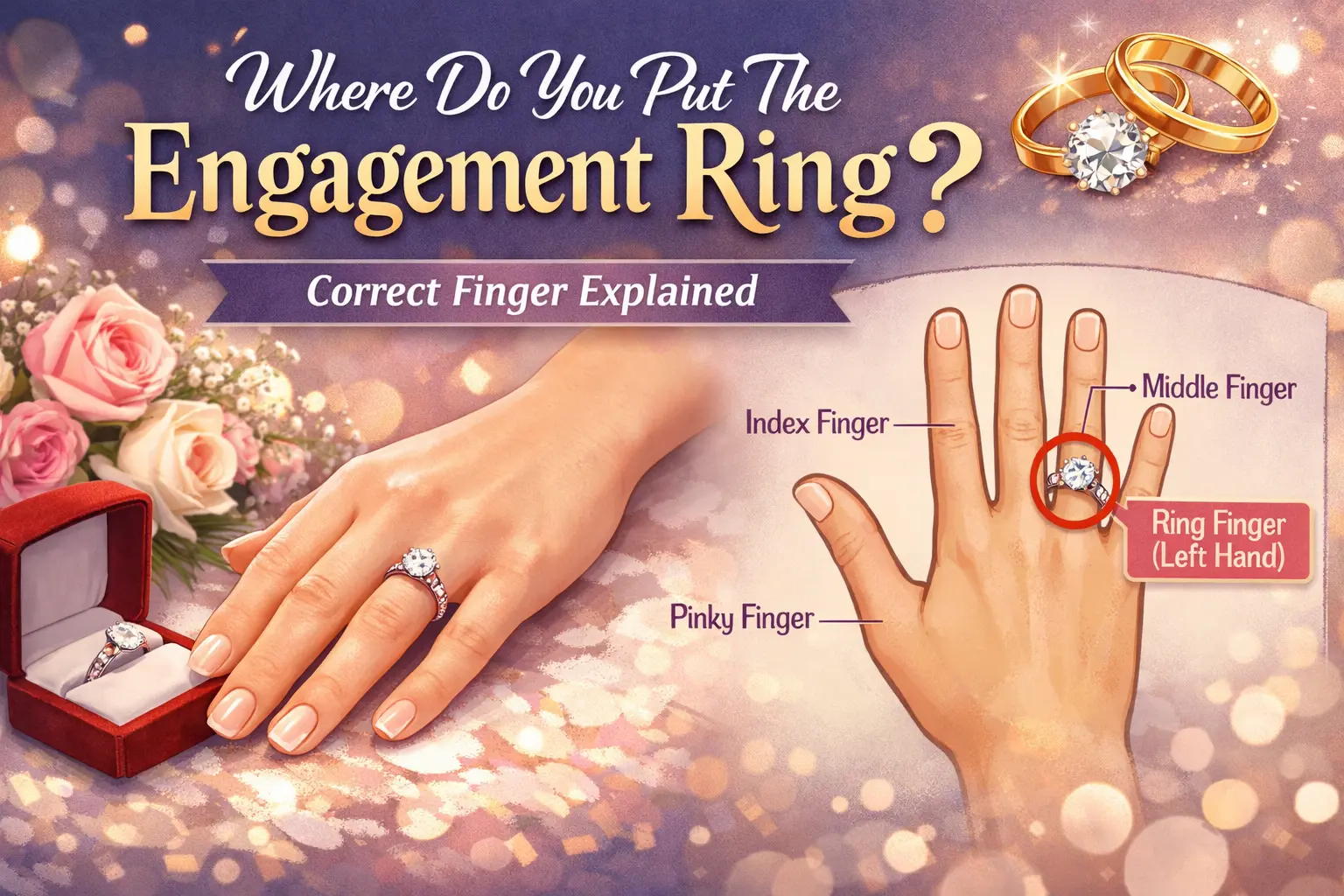
Where Do You Put the Engagement Ring? Correct Finger Explained
People rarely ask this question until the ring is already in their hand.
A client once visited us at Maroth Jewels a few days after proposing. He had done everything right. Chosen the diamond carefully. Planned the proposal. Even rehearsed what he would say.
Yet he walked into our factory slightly embarrassed and said something simple.
“I think I put the ring on the wrong finger.”
This happens more often than people realize. Engagement traditions are widely known yet poorly understood. Many couples assume there is only one correct answer. Others discover different customs depending on country culture or religion.
Some wear the ring on the left hand. Others prefer the right. In parts of India the groom wears the ring on one hand while the bride wears it on another. Some couples stack rings together after marriage while others move the engagement ring entirely.
The truth is simpler than most people think.
There is tradition.
There is symbolism.
Then there is personal choice.
In our experience helping couples choose engagement rings the biggest confusion is not the ring itself. It is understanding where the ring actually belongs.
This guide explains the correct finger, the historical reasons behind it and how modern couples choose to wear their rings today.
No complicated rules. No marketing fluff.
Just clear guidance based on history culture and real customer decisions we see every day at Maroth Jewels.
What Is the Engagement Ring Finger?
Definition of the ring finger
The engagement ring finger is the fourth finger of the hand.
If you count from the thumb it is the finger between the middle finger and the little finger. Many cultures call this the ring finger because it has historically been reserved for engagement rings wedding bands and commitment jewelry.
This finger holds a special symbolic meaning in many societies. It represents commitment love and partnership.
You will notice something interesting about this finger.
People often avoid wearing fashion rings on it before they get engaged. It almost feels reserved for something important.
Many of our clients tell us they purposely leave that finger empty until the proposal happens.
Not because someone told them to. It simply feels right.
Why the fourth finger is traditionally used?
The tradition of using the fourth finger goes back thousands of years.
Ancient civilizations believed this finger had a special connection to the heart. They thought a vein traveled directly from the ring finger to the heart.
This idea was called the Vena Amoris which translates to vein of love.
Today we know anatomically that every finger connects to the heart through the circulatory system. Yet the symbolism remained powerful enough to survive centuries.
Rings are circular. Circles represent eternity without beginning or end.
When placed on the finger believed to connect directly to the heart the symbolism becomes stronger.
This combination of meaning turned the fourth finger into the traditional place for engagement rings.
Even today most engagement rings are designed specifically to sit comfortably on this finger. Jewelers shape the band width and stone setting in ways that balance well between the middle and little finger.
At Maroth Jewels we consider this balance during design because comfort matters just as much as beauty when a ring will be worn every day.
Which Finger Do You Wear an Engagement Ring On?
The traditional engagement ring finger
Traditionally engagement rings are worn on the fourth finger of the left hand.
This custom dominates most Western countries including the United States the United Kingdom Canada and Australia.
The ring is placed there during the proposal and remains there until the wedding ceremony.
Many couples continue wearing both engagement ring and wedding band on that same finger after marriage.
This tradition is deeply ingrained in Western jewelry culture.
Yet it is not universal.
In several countries engagement rings are worn on the right hand instead. Some couples even switch hands after the wedding ceremony.
The concept remains the same though. The ring finger is still the fourth finger.
The hand may change depending on tradition.
Why couples choose the ring finger?
Beyond history there are practical reasons couples prefer this finger.
First reason is comfort.
The ring finger experiences less physical stress compared to the index finger or thumb. That makes it ideal for rings with gemstones or raised settings.
Second reason is protection.
Diamonds and gemstones last forever yet they can still chip if struck at certain angles. Wearing the ring on a finger that avoids constant impact reduces risk.
Third reason is symbolism.
Commitment jewelry feels different from fashion jewelry. Wearing it on a dedicated finger creates a daily reminder of that commitment.
Some couples experiment with wearing rings on other fingers temporarily. Almost all eventually return to the ring finger.
It simply feels right there.
Why Engagement Rings Are Worn on the Fourth Finger?
The Vena Amoris belief
The Vena Amoris story is probably the most romantic explanation behind engagement ring placement.
Ancient Romans believed the fourth finger contained a vein that connected directly to the heart. They called it the vein of love.
Placing a ring there symbolized love traveling straight to the heart.
Science later proved the vein itself does not exist. Yet traditions are not built purely on biology. They are built on symbolism.
The symbolism remains powerful even today.
Many couples still find the idea meaningful even if they know it is symbolic rather than anatomical.
In our experience this story often appears during proposals. One partner explains the meaning while sliding the ring onto the finger.
It becomes part of the memory attached to the ring itself.
Ancient Roman and Greek traditions
Romans popularized the tradition of engagement rings.
They believed rings represented ownership and commitment. Early rings were often made of iron rather than gold.
Later gold rings became more common among wealthy families.
Greek culture also embraced the idea of rings symbolizing devotion. Over time these traditions merged across Europe.
Diamond engagement rings appeared much later around the fifteenth century when Archduke Maximilian of Austria proposed with a diamond ring.
That moment influenced European royalty and gradually shaped modern engagement traditions.
How the tradition spread worldwide?
European customs spread globally through colonization trade and cultural exchange.
Countries influenced by British or European traditions adopted the left hand ring finger practice.
Other regions maintained their own customs.
Today globalization has blended many traditions together. Couples may follow Western customs or choose their own path.
At Maroth Jewels we see both.
Some clients specifically ask for rings designed for the left hand ring finger tradition.
Others prefer designs suitable for switching between hands after marriage.
Neither approach is wrong.
Tradition guides people but personal comfort often decides the final choice.
Which Hand Does the Engagement Ring Go On?
Left hand tradition explained
In Western cultures engagement rings are worn on the left hand ring finger.
This tradition dominates countries such as:
United States
United Kingdom
Canada
Australia
France
Italy
The symbolism behind the left hand comes from the Vena Amoris belief and centuries of cultural reinforcement.
Wedding bands are usually added to the same finger during the ceremony.
The wedding band sits closer to the heart while the engagement ring rests above it.
This arrangement represents marriage first followed by the engagement promise.
Many jewelers design engagement rings specifically to stack with wedding bands comfortably.
At Maroth Jewels we often guide clients through ring stacking considerations before they even choose the engagement ring.
Design decisions made early prevent uncomfortable stacking later.
Right hand tradition explained
Several countries prefer the right hand instead.
This includes:
Germany
Russia
Poland
India in some regions
Greece
Norway
In these cultures the right hand symbolizes strength honor and blessing.
Engagement rings wedding rings or both may be worn there.
Some couples follow an interesting tradition.
They wear the engagement ring on the left hand during engagement. After marriage they move the ring to the right hand.
This creates a clear distinction between engagement and marriage stages.
Dominant vs non dominant hand
Practicality plays a role as well.
Many people prefer wearing their engagement ring on the non dominant hand.
Right handed individuals often wear rings on the left hand because it reduces wear and tear.
Less contact with tools keyboards and daily activities means the ring remains safer.
Left handed individuals sometimes reverse this habit.
This is not about tradition. It is about protecting a piece of jewelry meant to last decades.
When clients ask us about durability we usually recommend considering their daily lifestyle.
A surgeon mechanic athlete or chef might choose a different approach compared to someone with a desk based routine.
Jewelry should fit real life not fight against it.
Engagement Ring Traditions Around the World
United States and United Kingdom
These countries follow the left hand ring finger tradition almost universally.
The engagement ring is placed on the fourth finger of the left hand during the proposal.
Wedding bands are added during the ceremony and stacked beneath the engagement ring.
Many couples continue wearing both rings together permanently.
This tradition strongly influences global jewelry marketing and design trends.
Most engagement rings you see online are designed with this stacking arrangement in mind.
Europe
Europe is more diverse.
Some countries follow the left hand tradition while others prefer the right.
Germany Poland and Russia often use the right hand for wedding rings.
Austria sometimes shifts rings from left to right after the wedding.
Spain and Portugal follow their own customs depending on region.
Travel across Europe and you will notice subtle variations.
Yet the fourth finger remains consistent across most cultures.
The hand may change but the finger rarely does.
India
India blends multiple traditions.
Engagement rings gained popularity relatively recently compared to mangalsutra or traditional wedding jewelry.
Many Indian couples now follow Western engagement customs.
Yet regional beliefs still influence ring placement.
Some communities prefer the right hand because it is considered auspicious.
Others follow the left hand tradition for women and right hand for men.
The diversity reflects India itself.
Russia and Eastern Europe
Right hand traditions dominate here.
The ring finger of the right hand symbolizes commitment and marriage.
This belief extends across several Eastern European countries.
Some couples still exchange rings during engagement while others wait until the wedding ceremony.
Middle Eastern traditions
Middle Eastern customs vary widely depending on country religion and family tradition.
Some couples wear engagement rings on the right hand before marriage then move them to the left after the wedding.
Others follow Western traditions entirely.
Cultural blending continues shaping modern practices.
Couples today often combine elements from multiple traditions.
Engagement Ring Finger in India
Engagement ring finger for women
Many Indian women wear engagement rings on the left hand ring finger today.
Urban couples often follow Western customs especially in metropolitan cities.
The left hand placement also aligns well with international jewelry traditions.
Yet several communities still prefer the right hand due to religious symbolism.
In Hindu rituals the right hand is considered pure and sacred.
This influences how rings are exchanged during engagement ceremonies.
Engagement ring finger for men
Men traditionally wear engagement rings on the right hand in many Indian communities.
The bride places the ring on the groom during the ceremony.
Some couples match hands while others follow separate customs.
In our experience modern couples increasingly prefer both partners wearing rings on the same hand.
It creates visual harmony and simplifies ring design choices.
Cultural and religious variations
India contains countless traditions.
North Indian ceremonies may differ from South Indian customs.
Sikh Christian and Hindu traditions each bring unique influences.
This diversity explains why there is no single correct answer.
Family customs often guide final decisions.
At Maroth Jewels we always encourage couples to consider both tradition and practicality.
Jewelry carries emotional meaning beyond fashion.
Respecting family customs while maintaining personal comfort creates the best balance.
Engagement Ring Finger for Men vs Women
Traditional differences
Historically engagement rings were worn mainly by women.
Men often received their wedding bands only during the marriage ceremony.
This reflected older social customs where proposals were initiated by men.
The engagement ring symbolized acceptance of the proposal.
Men did not usually wear engagement rings.
Modern trends where both partners wear rings
Modern relationships have evolved.
Many couples now exchange engagement rings together.
Same sex couples also follow engagement ring traditions.
Male engagement rings are becoming increasingly common.
Designs usually differ slightly.
Men prefer thicker bands lower profile settings and durable metals.
Women often choose gemstone centered designs.
The meaning remains identical.
A promise of marriage.
At Maroth Jewels we frequently create matching engagement sets designed for both partners.
It reflects a modern view of commitment as mutual rather than one sided.
Engagement Ring vs Wedding Ring What Is the Difference
Purpose of each ring
Engagement rings symbolize a promise to marry.
They are usually given during a proposal.
These rings often feature diamonds or gemstones and more elaborate designs.
Wedding rings symbolize the actual marriage.
They are exchanged during the wedding ceremony.
Wedding bands are typically simpler.
The symbolism shifts from promise to partnership.
Both rings together represent the journey from engagement to marriage.
When each ring is worn
Engagement rings appear first.
They are worn during the engagement period which can last months or years.
Wedding rings arrive during the ceremony.
After the wedding both rings are often worn together.
Some couples choose to wear only their wedding band daily and reserve the engagement ring for special occasions.
Lifestyle plays a big role here.
Large gemstone rings can feel impractical for certain professions.
Practicality sometimes wins over tradition.
How to Wear Engagement Ring and Wedding Band Together?
Traditional stacking method
Traditionally the wedding band sits closest to the heart.
This means the wedding band goes on the finger first.
The engagement ring sits above it.
The arrangement symbolizes marriage placed closest to the heart followed by the engagement promise.
Many jewelers design engagement rings to sit flush against wedding bands.
This prevents gaps between rings.
Engagement ring first vs wedding band first
Some couples reverse the order.
They wear the engagement ring first followed by the wedding band.
This mirrors the chronological order of receiving the rings.
Others prefer this arrangement because it feels more comfortable.
Ring stacking ultimately depends on ring design.
Certain settings simply fit better one way than the other.
Wearing rings on separate hands
Some couples separate the rings entirely.
The engagement ring may move to the right hand after marriage.
The wedding band remains on the left.
This gives each ring visual space.
It also prevents scratching if both rings have gemstones.
We sometimes recommend this approach when engagement rings have large center stones.
Comfort matters more than strict tradition.
Can You Wear an Engagement Ring on the Right Hand?
Yes.
Many people do.
Cultural traditions personal style and practical comfort all influence this choice.
Some couples choose the right hand simply because it feels natural.
Others follow family customs.
Jewelry traditions evolve constantly.
What matters most is the meaning behind the ring not the hand it sits on.
Alternative Ways to Wear an Engagement Ring
Some individuals wear their ring on a necklace chain when working with their hands.
Others move the ring to another finger temporarily.
Ring stacking with anniversary bands is another popular trend.
Engagement rings do not have to remain static forever.
Jewelry evolves with life events.
Practical Tips When Choosing Which Hand to Wear Your Ring
Comfort should always guide your decision.
Rings worn daily should feel natural.
Choose a secure fit.
Avoid wearing rings during heavy physical activity.
Remove rings when handling chemicals or lifting weights.
Clean diamonds regularly with mild soap and warm water.
Professional inspection once a year helps prevent loose stones.
At Maroth Jewels we always remind clients that engagement rings are lifetime jewelry.
Proper care keeps them beautiful for decades.
Frequently Asked Questions
Q1. Which finger is the engagement ring worn on?
Ans1. The fourth finger known as the ring finger.
Q2. Which hand do men wear engagement rings on?
Ans2. Traditionally the right hand in many cultures though modern couples often match hands.
Q3. Can engagement rings be worn on the right hand?
Ans3. Yes many cultures prefer the right hand.
Q4. Do you move the engagement ring during the wedding ceremony?
Ans4. Some brides move it to the right hand temporarily so the wedding band can be placed first.
Q5. Can you wear engagement and wedding rings on different hands?
Ans5. Yes many couples choose this for comfort.
Q6. Which finger to put an engagement ring on?
Ans6. The ring finger between the middle and little finger.
Q7. Where to put the engagement ring right or left?
Ans7. Both are acceptable depending on culture and personal choice.
Q8. Which hand do Hindus wear engagement ring?
Ans8. Often the right hand though modern couples may choose either.
Q9. Is left ring finger marriage?
Ans9. Yes in many Western traditions the left ring finger represents marriage.
Conclusion Choosing the Right Finger for Your Engagement Ring
The simple answer is this.
Most engagement rings are worn on the fourth finger known as the ring finger.
Traditionally this finger sits on the left hand in Western cultures.
Other regions prefer the right hand.
History tradition religion and personal comfort all shape this decision.
The ring itself matters more than the finger it sits on.
It represents commitment shared between two people.
At Maroth Jewels we have seen thousands of rings pass from box to finger during proposals engagements and weddings.
Every story feels slightly different.
Yet the moment remains the same.
A ring placed on a finger with intention.
That moment turns a piece of jewelry into something far more meaningful.
Shop This Category
Rings
Wholesale Custom Jewelry Manufacturers
Maroth Jewels is a leading manufacturer specializing in 92.5 Sterling Silver, 14K/18K Gold, and Gemstones jewelry. We support designers and retail brands worldwide.
Request Bulk QuoteLooking for more articles?
Browse all blogsLatest Products
View AllPrivate Lable 14K Yellow Gold Marquise Bloom Ear Jacket Earrings with Marquise CZ Stones Floral Statement Fine Jewelry
Private Lable 925 Silver Yellow Gold Plated Marquise Bloom Ear Jacket Earrings with Marquise CZ Stones Floral Statement Fine Jewelry
14K Yellow Gold CZ Lumera Apple Pendant Elegant Fruit Charm Designer Jewelry Supplier
925 Silver Yellow Gold Plated CZ Lumera Apple Pendant Elegant Fruit Charm Designer Jewelry Supplier
Wholesale 14K Yellow Gold Sylvara Tree Disc Pendant with CZ Minimalist Nature Inspired Circle Charm Handmade Jewelry
Wholesale 925 Silver Yellow Gold Plated Sylvara Tree Disc Pendant with CZ Minimalist Nature Inspired Circle Charm Handmade Jewelry
14K White Gold Minimal Rabbit Nature Inspired Bunny Animal Ring Manufacturer
925 Sterling Silver White Gold Plated Minimal Rabbit Nature Inspired Bunny Animal Ring Manufacturer
14K Yellow Gold Black CZ Velvet Poodle Minimalist Puppy Animal Ring Custom Jewelry
925 Silver Yellow Gold Plated Black CZ Velvet Poodle Minimalist Puppy Animal Ring Custom Jewelry
Contact Us For Custom Jewelry
Please get in touch with us and share your ideas if you have personalized jewelry or are searching for a private label jewelry manufacturer. In accordance with your suggestions, we will make and present genuine jewelry.
B2B Jewelry Manufacturer for Global Brands
Share your design, metal, plating, gemstone, and quantity requirements for a custom manufacturing quotation. We work in sterling silver and solid gold, including precious, semi-precious, lab diamond, and genuine diamond jewelry.
MOQ & Pricing
MOQ usually starts from 5 to 10 pieces depending on design. Sample pricing and quantity-based prices are available.
CAD & Production
CAD usually takes 3 to 4 working days. Sample production takes 25 to 30 days and bulk production takes 30 to 40 days.
Shipping
Shipping: 4 to 7 days worldwide.
Payments
We accept payments via PayPal, Payoneer, Wise, and bank transfer.