



Are Ring Sizes Unisex? Complete Ring Size Guide for Men and Women
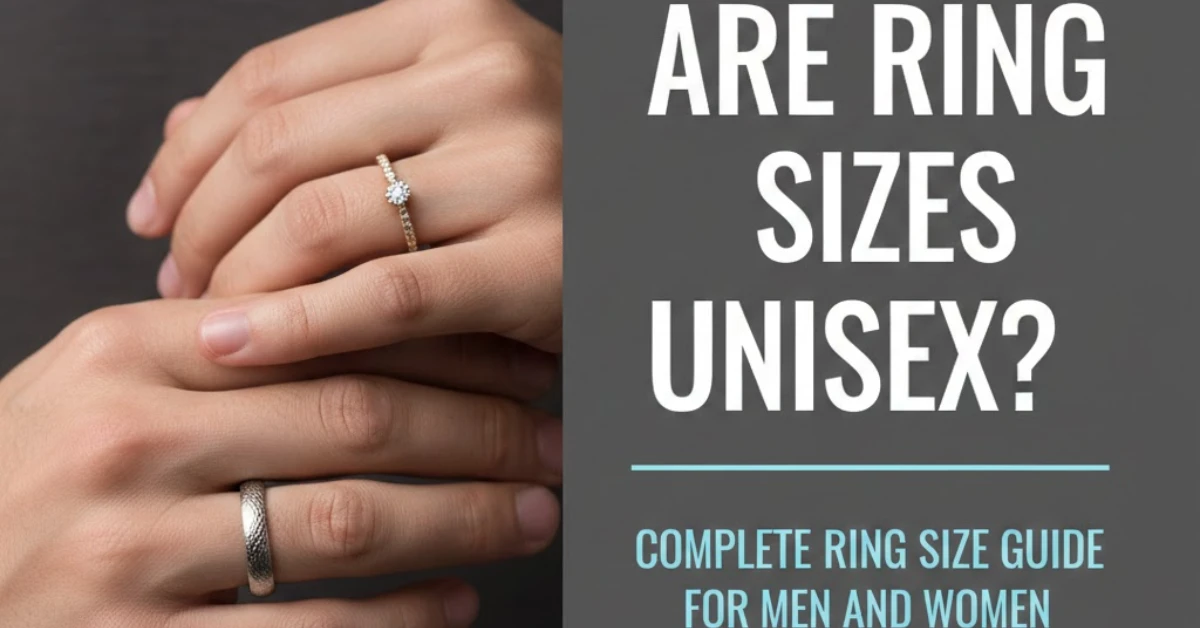
Are Ring Sizes Unisex? Complete Ring Size Guide for Men and Women
Ring shopping often raises a simple but confusing question: are ring sizes unisex? Many people assume that men’s and women’s ring sizes are different systems, while others believe one standard applies to everyone. The truth lies somewhere in between, and understanding it can save time, money, and resizing hassles.
Ring sizes are technically unisex, but finger anatomy, ring styles, and cultural sizing habits create differences in how sizes are commonly used. This complete guide explains what unisex ring sizing really means and how to choose the correct size with confidence.
What Does “Unisex Ring Size” Actually Mean?
When ring sizes are described as unisex, it means the measurement system is the same for everyone. A size 7 ring has the same inner diameter whether it’s worn by a man or a woman. The sizing scale does not change based on gender. The sizing system itself remains universal and gender-neutral.
Standard Ring Size Systems Explained
Ring sizes are measured differently across regions, but within each system, sizes are universal. The most common systems include US, UK, European, and Asian sizing charts.
In the US system, sizes are numerical, usually ranging from size 3 to size 13. In the UK system, letters are used instead of numbers. European sizes are based on millimeters of finger circumference.
Average Ring Sizes for Men and Women
While ring sizes are unisex, average sizes tend to differ. Women typically wear rings between US size 5 and 7, while men usually wear rings between US size 8 and 11. These are averages, not rules.
Some women have larger fingers, and some men have smaller fingers. Body structure, height, weight, and bone density all influence finger size.
Why People Think Ring Sizes Are Gender-Specific?
The misconception comes from marketing and jewelry categories. Rings are often labeled as “men’s” or “women’s” based on design, width, and style, not size measurement.
Men’s rings are usually wider and heavier, which makes them feel tighter. Women’s rings are often thinner, which affects how the same size fits.
Ring Width and Its Effect on Fit
Ring width plays a major role in comfort and fit. Wider rings cover more surface area on the finger, making them feel snug. Narrow rings feel looser even at the same size.
Because men’s rings are often wider, men may need to size up slightly for comfort. This does not mean the size system is different only that fit perception changes.
Are Engagement and Wedding Ring Sizes Unisex?
Yes, engagement and wedding ring sizes are also unisex. The same sizing chart applies whether the ring is for a man or a woman. What differs is style and width.
Many modern couples choose matching or unisex wedding bands. In such cases, each partner still chooses their own size based on finger measurement.
How to Measure Ring Size Accurately at Home?
Measuring ring size at home is easy if done correctly. You can use a ring sizing chart, printable guide, or a measuring tape to check finger circumference.
Measure your finger at room temperature, as cold shrinks fingers and heat causes swelling. It’s best to measure at the end of the day when fingers are at their largest.
Why Finger Size Can Change Over Time?
Finger size is not fixed for life. Weight changes, aging, climate, and health conditions can all affect finger size. This applies equally to men and women.
Some people find their ring fits differently in summer versus winter. Others notice changes over years. This is why jewelers recommend re-measuring before major purchases.
Can Men Wear “Women’s” Ring Sizes and Vice Versa?
Absolutely. Since ring sizes are unisex, anyone can wear any size that fits their finger. There is no such thing as a “female-only” or “male-only” size.
Design and comfort are what matter. A man with smaller fingers may wear a size 6, while a woman with larger fingers may wear a size 9.
International Ring Size Conversion
If you’re buying rings online or internationally, conversion charts are essential. A US size 7 is not the same number in UK or European systems, but the physical measurement is equivalent.
Most reputable jewelers provide conversion charts. Always double-check before ordering, especially for custom or non-returnable rings.
Are Children’s Ring Sizes Also Unisex?
Yes, children’s ring sizes follow the same sizing system, just at the lower end of the scale. Sizes are still measured the same way regardless of gender.
Growth is the main concern with children’s rings. Adjustable rings are often recommended to accommodate changes.
How Jewelers Determine Ring Size in Store?
Professional jewelers use metal ring sizers or mandrels to measure finger size accurately. This is the most reliable method.
They also consider factors like ring width, finger shape, and comfort preferences. This professional approach reinforces that sizing is personal, not gendered.
Final Answer: Are Ring Sizes Unisex?
Yes, ring sizes are completely unisex in terms of measurement. A size 7 is a size 7 for everyone. What differs are average finger sizes, ring styles, and comfort preferences not the sizing system itself.
Understanding this helps you shop smarter, avoid resizing, and feel confident choosing any ring you love. Fit matters, not gender labels.
Conclusion: Choosing the Right Ring Size with Confidence
Ring sizing is universal, but ring fitting is personal. Focus on measurement, ring width, and comfort rather than labels like men’s or women’s. Jewelry is about expression, and sizing is about precision. With the right knowledge, finding the perfect fit becomes simple and stress-free.
Recent Posts
 -65%
-65%
14K Yellow Gold 12 MM Chain Thikness Paperclip Chain Necklace Custom Jewelry
 -60%
-60%
 -60%
-60%
 -60%
-60%
925 Silver Yellow Gold Plated Rolo Chain Necklace Jewelry Supplier
Wholesale 14K Yellow Gold Two-Tone Link Charm Chain Necklace Jewelry
 -65%
-65%
14K Yellow Gold Thin Chain Necklace Custom Jewelry
-60%
925 Silver Yellow Gold Plated Thin Chain Necklace Custom Jewelry
 -65%
-65%
Private Lable 14K Yellow Gold Minimalist Alphabet Letter Charm Chain Necklace Jewelry
-60%
-65%
14K Yellow Gold 12 MM Chain Thikness Paperclip Chain Necklace Custom Jewelry
-60%
-60%
-60%
925 Silver Yellow Gold Plated Rolo Chain Necklace Jewelry Supplier
Wholesale 14K Yellow Gold Two-Tone Link Charm Chain Necklace Jewelry
-65%
14K Yellow Gold Thin Chain Necklace Custom Jewelry
-60%
925 Silver Yellow Gold Plated Thin Chain Necklace Custom Jewelry
-65%
Private Lable 14K Yellow Gold Minimalist Alphabet Letter Charm Chain Necklace Jewelry
-60%
Contact Us For Custom Jewelry
Please get in touch with us and share your ideas if you have personalized jewelry or are searching for a private label jewelry manufacturer. In accordance with your suggestions, we will make and present genuine jewelry.
B2B Jewelry Manufacturer for Global Brands
Share your design, metal, plating, gemstone, and quantity requirements for a custom manufacturing quotation. We work in sterling silver and solid gold, including precious, semi-precious, lab diamond, and genuine diamond jewelry.