A Comprehensive Guide to Stud Earring Sizes
Stud earrings may look small, but they hold one of the most important roles in everyday jewelry. They balance elegance with simplicity, making them a favorite for people of every age, style, and profession.
And while designs matter, size is what truly defines how a stud earring looks when worn. A perfectly chosen size can flatter your features, suit the occasion, and elevate your entire look without shouting for attention.
At Maroth Jewels, we craft stud earrings for global brands, boutique designers, and custom jewelry houses that demand precision. One thing we see consistently is how often people underestimate the importance of choosing the right stud size.
This complete guide will help you make a confident and informed choice, whether you're picking something for yourself, your customers, or designing a collection.
Understanding Stud Earring Size: The Basics
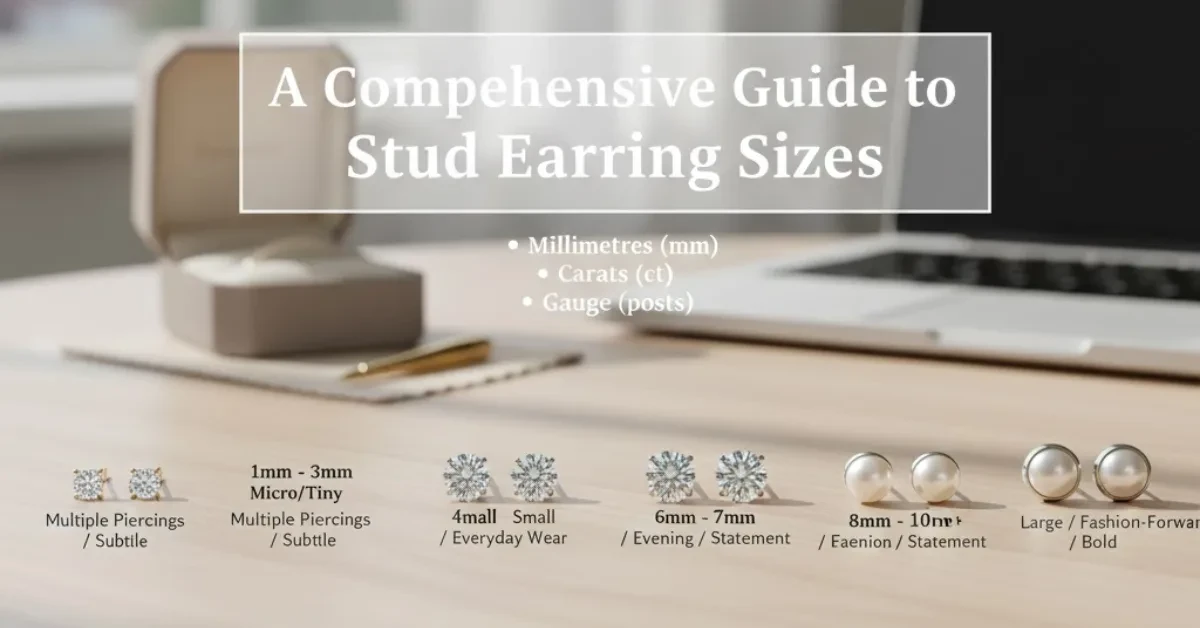
Stud earring size is usually measured in millimeters (mm), especially for gemstones, diamonds, and classic metal studs. Millimeters give a far more accurate idea of how the earring will appear on the ear compared to descriptions like “small,” “medium,” or “large,” which vary widely depending on brand or region.
To visualize it more clearly, imagine the width of the stud from one side to the other. That’s the measurement you see listed as 2mm, 4mm, 6mm, and so on. Even a small 1–2mm difference can noticeably change how a stud looks when worn. For example, 3mm studs are delicate, while 6mm studs are instantly more visible, and 10mm studs begin to enter bold statement territory.
While millimeters are standard for design and manufacturing, diamonds have an additional size reference measured in carat weight. Carat does not equal size it measures weight, not surface area so most jewelers and customers rely on mm to understand the actual look.
Why Stud Size Matters More Than You Think?
Choosing the right stud earring size does much more than affect appearance. It influences comfort, balance, styling versatility, durability, and even long-term wearability. For those with newly pierced ears, smaller and lighter studs are often recommended to minimize strain.
Size also affects how a gemstone or diamond catches the light. A larger stone may appear more brilliant, but if it’s too large for the wearer’s ear, it may droop or tilt. Similarly, a smaller size may lose visibility when paired with certain outfits. This is why both jewelers and consumers spend time fine-tuning sizing selections during purchase or manufacturing.
One of the goals at Maroth Jewels is to help jewelry brands choose the right stud sizes for their target audience. A designer catering to minimalists may love a 2mm–4mm range, while bridal collections perform better with 6mm–10mm offerings.
Common Stud Earring Sizes Explained
Stud earrings typically fall within a standard range, though the style and purpose influence which size is most popular.
2mm–3mm studs are the smallest common sizes and are perfect for minimalists or for additional piercings when someone wears multiple earrings. They sit neatly on the earlobe without drawing too much attention, making them ideal for professional settings or school. Many people also choose these for children because of their small and non-intrusive appearance.
4mm–5mm studs are the universal sweet spot. These sizes provide just the right amount of visibility without looking flashy. They work beautifully for daily wear and allow gemstones or diamonds to show brilliance without overwhelming the wearer. Most classic solitaire studs fall into this size category.
6mm–7mm studs, the presence becomes more noticeable. These sizes are wonderful for special occasions or when you want the earring to be a focal point. They also photograph well, which is why they are popular choices for bridal jewelry, festive collections, or luxury fine jewelry.
8mm–10mm studs make an undeniable statement.
These are larger and typically worn for glam events, photoshoots, or modern fashion-forward styling. They stand out clearly and work beautifully with round-cut diamonds, pearls, or larger metal motifs. They may feel too heavy for everyday wear unless designed with lightweight metals or hollow structures.
10mm, stud earrings begin to transition into artistic, maximalist, or contemporary statement categories. These are less common for daily wear but make excellent fashion pieces when used in designer collections.
How Stud Sizes Look on the Ear?
One of the most common challenges buyers face is imagining how a stud earring will actually look once it’s worn. Millimeters can be hard to visualize, especially for people new to jewelry. To help with this, think of your earlobe as a proportional canvas. A small lobe makes a 5mm stud look bigger than it would on someone with a fuller lobe.
On average-sized lobes, a 3mm stud appears subtle and refined. It catches light gently but stays close to the ear. A 5mm stud sits perfectly at the center of the lobe, offering a balanced look that works for all ages. A 7mm stud begins to cover more of the lobe and becomes visually dominant. It looks glamorous without being overwhelming. A 10mm stud covers a larger area and gives a luxurious, bold presence.
Face Shape and Stud Earring Size
While stud earrings are universal, certain sizes complement specific face shapes more naturally. This doesn’t mean you must follow these guidelines strictly, but they can help you make more informed choices.
If you have a round face, choosing studs in the 4mm–6mm range helps balance the softness of your features without adding too much roundness. Slightly angular or unique-cut studs also work beautifully.
For square faces, medium to larger studs in the 5mm–8mm range add a touch of softness. Rounded stones or pearls help offset strong jawlines and add harmony to the overall look.
Those with oval faces can wear almost any size comfortably. Oval is the most versatile face shape, allowing you to explore everything from minimal micro studs to larger 10mm statement solitaires.
If you have a heart-shaped face, try studs in the 3mm–6mm range. These sizes prevent the upper face from appearing too broad and complement the narrower jawline.
Stud Earring Sizes for Different Age Groups
Age matters when selecting the right stud size because comfort and proportions change over time. Babies and young children usually wear 2mm–3mm studs to ensure safety and reduce heaviness.
Teenagers may enjoy 3mm–5mm sizes as they transition into more expressive fashion choices. Adults often prefer 4mm–7mm for daily wear because it offers a combination of comfort and visibility.
For older adults or individuals with sensitive earlobes, lightweight studs in 4mm–6mm sizes are often the best choice. These sizes minimize ear sagging and maintain a youthful appearance while still offering style.
At Maroth Jewels, we help brands tailor their stud sizes according to customer age groups and cultural style preferences.
Stud Size for Multiple Piercings
Multiple ear piercings are a huge trend, and stud size plays a crucial role in creating a clean, layered aesthetic. Typically, the main lobe piercing uses a slightly larger stud around 4mm–6mm while second or third piercings use 2mm–4mm studs. This creates a natural flow and prevents overcrowding.
When all studs are the same size, the ear may look visually heavy or unbalanced. Designers often create curated ear sets with carefully chosen size graduations to help customers achieve a cohesive look. This is why size variation is one of the most important factors in modern ear styling.
How to Measure Stud Earrings Correctly?
If you already own a pair of studs and you’re unsure about the size, the simplest method is to measure the diameter using a ruler or digital caliper. For studs with gemstone settings, measure across the widest visible point. If you’re measuring a pearl or round metal stud, ensure you measure edge to edge for accuracy.
For design and manufacturing, precision is crucial. At Maroth Jewels, our craftsmen work with high-level accuracy because even a 0.2mm variation can change the way a gemstone fits into its setting or how a stud sits on the ear. This precision ensures each pair turns out symmetrical, balanced, and comfortable.
Tips for Selecting the Perfect Stud Size
Choosing a stud size ultimately comes down to personal preference. But a few reliable guidelines can help simplify the decision. Take into account your earlobe size, your lifestyle, and how often you plan to wear the studs. If you wear them daily, stay within 3mm–5mm.
If you love noticeable jewelry, move toward 6mm–8mm. And if you’re choosing studs for a significant occasion, larger sizes around 8mm–10mm offer dramatic elegance.
Final Thoughts
Selecting the right stud earring size may seem like a small detail. But it plays a huge role in comfort, style, and overall presentation. Whether you prefer minimal elegance or statement sparkle, understanding millimeter measurements empowers you to choose earrings that truly elevate your look.
At Maroth Jewels, we believe fine jewelry should blend craftsmanship with thoughtful design, and size is one of the most important elements of that formula. With this comprehensive guide, you are now fully equipped to choose the perfect stud size for yourself or your brand.
If you ever need customized stud earrings, wholesale manufacturing, or design consultation, Maroth Jewels is always ready to help you create pieces that stand out in beauty and precision.
Shop This Category
Carabiner Lock
Wholesale Custom Jewelry Manufacturers
Maroth Jewels is a leading manufacturer specializing in 92.5 Sterling Silver, 14K/18K Gold, and Gemstones jewelry. We support designers and retail brands worldwide.
Request Bulk QuoteLooking for more articles?
Browse all blogsLatest Products
View AllPrivate Lable 14K Yellow Gold Marquise Bloom Ear Jacket Earrings with Marquise CZ Stones Floral Statement Fine Jewelry
Private Lable 925 Silver Yellow Gold Plated Marquise Bloom Ear Jacket Earrings with Marquise CZ Stones Floral Statement Fine Jewelry
14K Yellow Gold CZ Lumera Apple Pendant Elegant Fruit Charm Designer Jewelry Supplier
925 Silver Yellow Gold Plated CZ Lumera Apple Pendant Elegant Fruit Charm Designer Jewelry Supplier
Wholesale 14K Yellow Gold Sylvara Tree Disc Pendant with CZ Minimalist Nature Inspired Circle Charm Handmade Jewelry
Wholesale 925 Silver Yellow Gold Plated Sylvara Tree Disc Pendant with CZ Minimalist Nature Inspired Circle Charm Handmade Jewelry
14K White Gold Minimal Rabbit Nature Inspired Bunny Animal Ring Manufacturer
925 Sterling Silver White Gold Plated Minimal Rabbit Nature Inspired Bunny Animal Ring Manufacturer
14K Yellow Gold Black CZ Velvet Poodle Minimalist Puppy Animal Ring Custom Jewelry
925 Silver Yellow Gold Plated Black CZ Velvet Poodle Minimalist Puppy Animal Ring Custom Jewelry
Contact Us For Custom Jewelry
Please get in touch with us and share your ideas if you have personalized jewelry or are searching for a private label jewelry manufacturer. In accordance with your suggestions, we will make and present genuine jewelry.
B2B Jewelry Manufacturer for Global Brands
Share your design, metal, plating, gemstone, and quantity requirements for a custom manufacturing quotation. We work in sterling silver and solid gold, including precious, semi-precious, lab diamond, and genuine diamond jewelry.
MOQ & Pricing
MOQ usually starts from 5 to 10 pieces depending on design. Sample pricing and quantity-based prices are available.
CAD & Production
CAD usually takes 3 to 4 working days. Sample production takes 25 to 30 days and bulk production takes 30 to 40 days.
Shipping
Shipping: 4 to 7 days worldwide.
Payments
We accept payments via PayPal, Payoneer, Wise, and bank transfer.